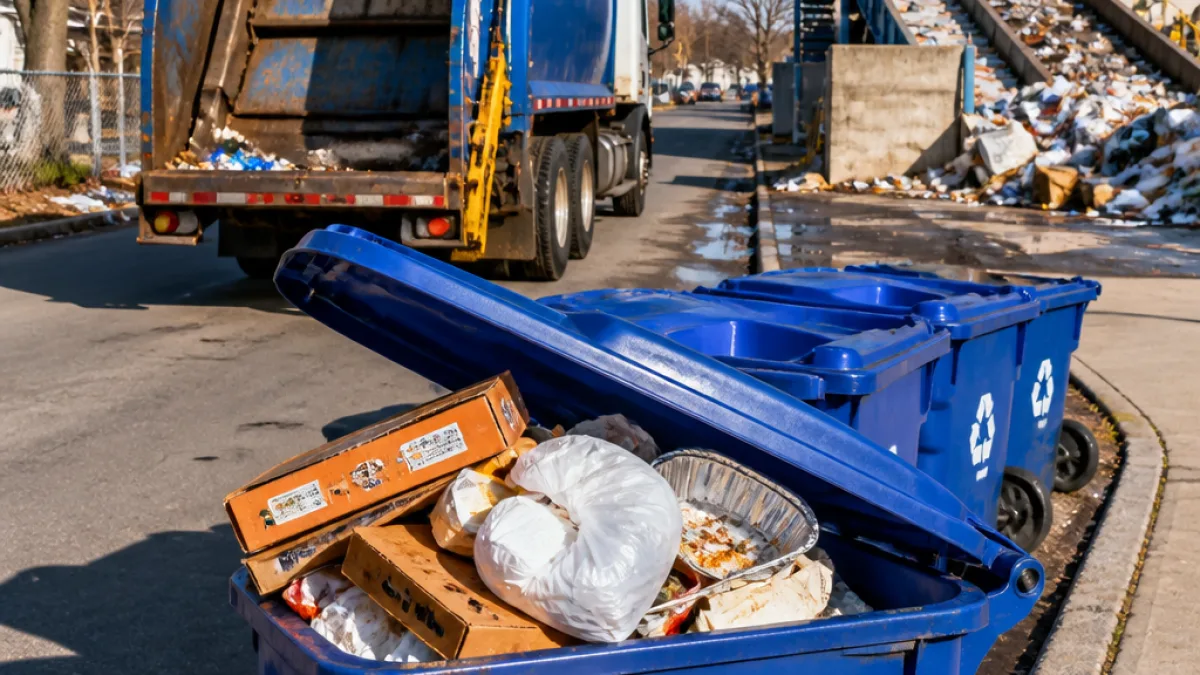
Many Manitobans have stood in front of a blue bin wondering whether an item belongs there. Instead of risking a landfill trip, they place it in the recycling, hoping the system will sort it out. That behaviour, known as wish-cycling, is increasingly costly for municipal recycling programs and can undermine their effectiveness.
How wish-cycling increases costs
Recycling facilities do remove non-recyclable items, but those items still have to be transported and disposed of, adding handling and landfill or incineration charges. Facilities typically bill municipalities based on the total weight of each load, not solely the recyclable portion. That means every non-recyclable item placed in the bin increases processing costs for local governments and, ultimately, for taxpayers.
Contamination is not limited to entirely non-recyclable objects. Food residue, liquids and greasy containers — including pizza boxes — can soil otherwise recyclable paper, cardboard and plastics. When contamination spreads through a load, materials that could have been recycled may instead be diverted to a landfill, reducing the overall yield of recycling programs and driving up disposal bills.
Local services already feeling pressure
As contamination and processing costs have risen, some municipalities have reduced or eliminated recycling services. That trend illustrates the direct link between household sorting choices and the availability of curbside recycling — a service many residents expect but which relies on correct participation to remain sustainable.
Practical steps Manitobans can take
Recycling experts advise residents to place only items they are certain are accepted in their community program into the bin. A few extra seconds to check can prevent a non-recyclable item from increasing processing costs or ruining a load of otherwise recyclable material. Useful resources include municipal recycling guides and searchable tools such as Recyclepedia.
- Confirm what your municipality accepts before placing an item in the recycling bin.
- Empty and rinse containers to remove liquids and food residue.
- Keep soiled items, like greasy pizza boxes, out of the blue bin.
- When in doubt, check a local recycling guide or the online search tool used by your municipality.
Common wish-cycled items and the right action
Some items are frequently wish-cycled because people assume sorting facilities will handle them. The table below summarises typical problematic items and what should be done instead. These categories are based on common contamination issues and the advice widely shared by recycling experts.
| Item | Why it's a problem | Proper action |
|---|---|---|
| Greasy pizza boxes | Oil soaks into cardboard and contaminates paper fibres | Compost if accepted locally, otherwise garbage |
| Food containers with residue | Food residue contaminates loads and attracts pests | Rinse or dispose in garbage/compost depending on local rules |
| Non-recyclable plastics (e.g., certain films) | Not accepted by many municipal programs; jams equipment | Return to store take-back or garbage if no program exists |
| Mixed-material items (e.g., paper lined with plastic) | Hard to separate and often not recyclable | Garbage or special collection if available |
Why municipal guidance matters
Recycling programs differ among Manitoba municipalities. What is accepted in one community may be rejected in another. That variation is why experts consistently recommend consulting the local recycling guide or an online search tool before placing uncertain items in the blue bin.
When residents follow local rules, recycling streams become cleaner, processing becomes more efficient and municipalities face fewer unexpected disposal charges. That in turn helps protect services that many households rely on.
Small changes in sorting habits — taking a moment to rinse containers, checking whether an item is accepted, or putting greasy paper in the garbage — can help reduce contamination, lower operating costs and keep recycling programs running for the long term.
For Manitobans who want to make a difference, the best approach is practical: know what your community accepts, clean and empty your recyclables, and when uncertain, check the local guide rather than hope the system will fix it.