Malaysia is moving to tighten rules for hikers across the country after authorities recorded a marked rise in incidents of lost or stranded walkers, a spike officials and mountain guides link to social‑media driven trends that encourage risky, minimalist approaches to challenging terrain.
New measures target high‑risk routes and influencers
The Malaysian Fire and Rescue Department reported that in the first five months of 2026 there were 52 cases of lost hikers — an increase of nearly 30 per cent compared with the same period in 2025. In response, the federal government has proposed a package of measures designed to reduce emergencies and strengthen oversight of recreational mountain activities.
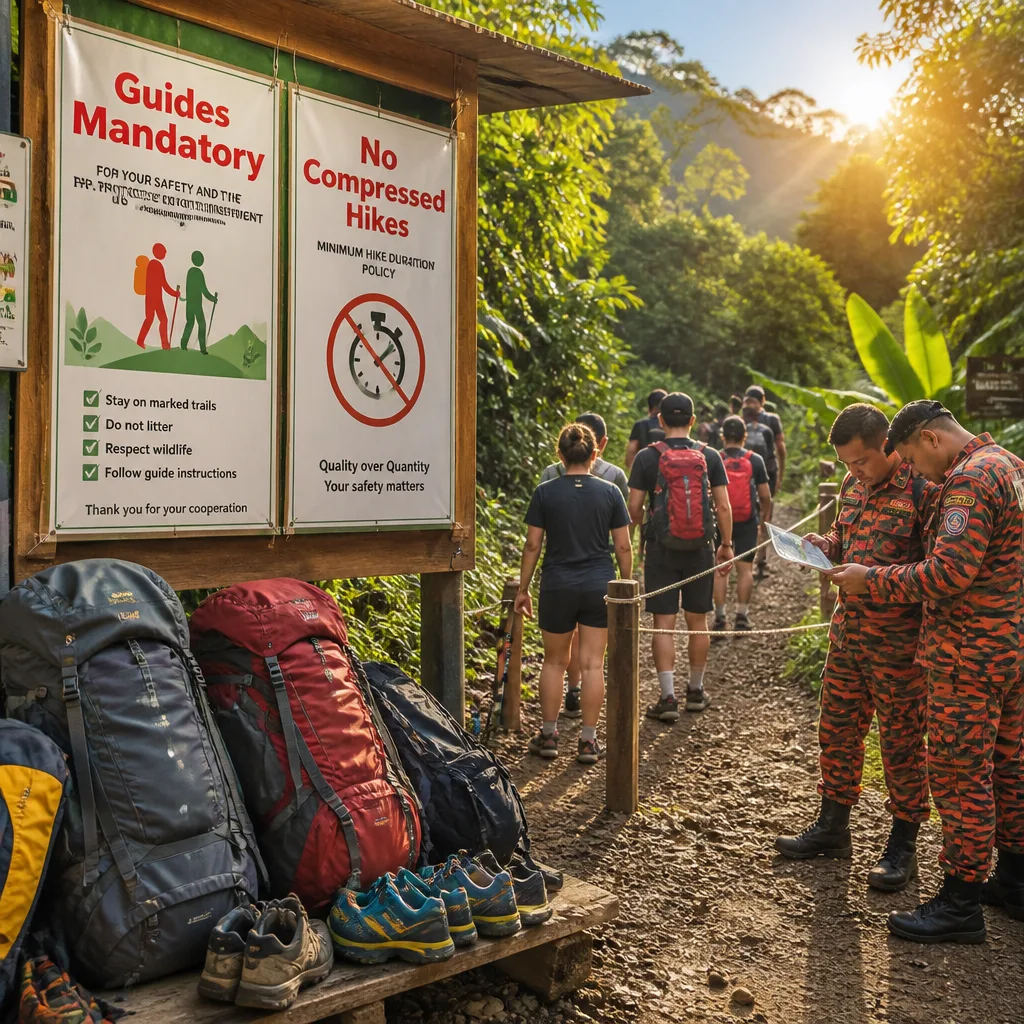
Among the measures announced are making guides compulsory in 189 high‑risk locations, tightening pre‑climb screening processes and banning certain so‑called “compressed hikes” in areas deemed dangerous. Officials told the upper house of parliament that compressed hikes — shortened or accelerated versions of longer climbs — will not be allowed in many mountainous regions evaluated as high risk.
“There are hikers who focus more on getting interesting content that they are willing to take risks and neglect their own safety.”
The comment above comes from Norimah Abd Karim, a member of an association of certified forestry mountain guides, who has warned that many participants seek to present themselves as professional trail runners on social media and therefore carry minimal kit. That behaviour, she said, contributes to a higher incidence of emergencies when conditions change or routes prove harder than advertised online.
Authorities cite social media trends as a contributing factor
Officials, including Deputy Minister Syed Ibrahim Syed Noy, have linked the increase in rescues to trends within the outdoor influencer community — sometimes called “hike‑tok” — that popularise compressed itineraries and an achievement‑oriented relationship with nature, such as rapid “bagging” of summits.
Syed Ibrahim told the upper house that underestimating preparation and being driven by content creation has elevated the risk of incidents. The deputy minister’s remarks were published by the Malaysian national news agency Bernama.
While the government has said the new rules will be implemented nationwide, details on enforcement in all jurisdictions remain incomplete. In at least one state, authorities have already stated they will not approve applications for compressed hiking activities; another state has introduced minimum climbing periods of several days for certain routes, signalling variation in how the policy will be applied regionally.
Permits, guides and the challenge of enforcement
Malaysia already requires permits to hike in many state parks and forest reserves. The changes announced expand that regulatory framework by adding compulsory guides at identified high‑risk sites and by strengthening the pre‑climb screening designed to ensure hikers are suitably equipped and prepared.
Those who oversee mountain rescue and forest management face a familiar enforcement challenge: regulating a dispersed recreational activity across private, state and federal jurisdictions while responding to rapidly shifting social norms amplified by online platforms. The government has not yet published a full enforcement matrix detailing penalties or the precise criteria that will define a compressed hike for approval purposes.
- 52 lost‑hiker incidents reported in the first five months of 2026
- Nearly 30% increase compared with same period in 2025
- 189 high‑risk locations designated for mandatory guides
| Item | Detail |
|---|---|
| Reported lost‑hiker cases (Jan–May 2026) | 52 |
| Year‑over‑year change | ~30% increase |
| Locations requiring guides | 189 |
Mountain guides’ associations and emergency services stress that the popularity of visually driven content — quick, striking footage of summit moments, steep ascents and contrived “compressed” achievements — can encourage participants to pare back essential supplies or to attempt routes beyond their experience. That dynamic has prompted the policy response, which mixes preventative screening, stricter local controls and targeted bans.
The reforms are likely to affect domestic and international visitors who plan visits to Malaysia’s state parks and popular mountain trails. They also raise questions about how authorities will balance public safety with access to natural areas and how they will work with local governments and ranger services to apply the new rules consistently.
In the short term, the government’s approach aims to reduce emergency responses and to deter risky, content‑driven behaviour on trails. Over the longer term, officials and guides will need to monitor whether the measures decrease rescues and whether further regulatory or educational steps are required to address the influence of social media on outdoor recreation habits.
— NEXO RADAR World Desk