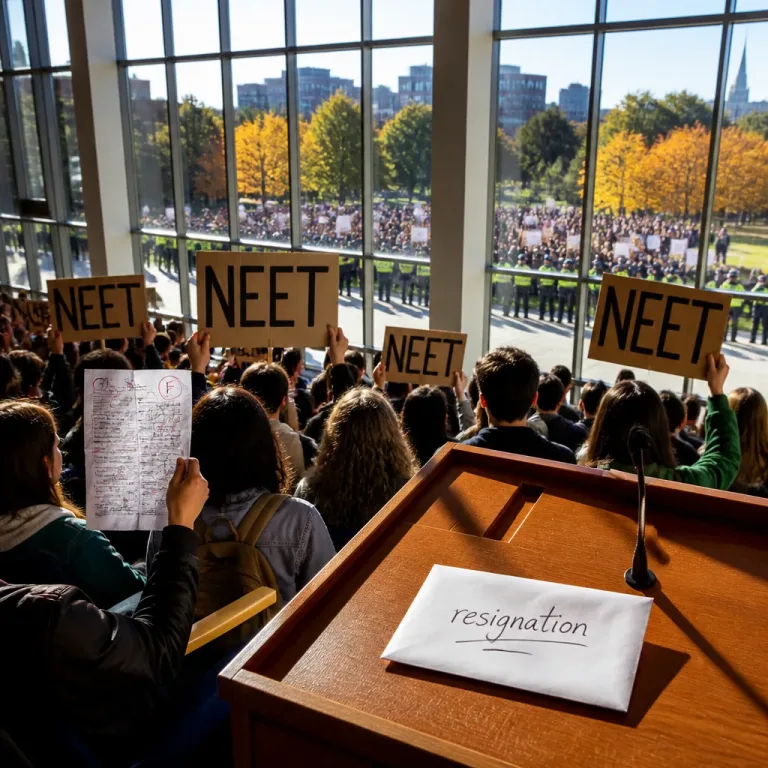
India’s education minister, Dharmendra Pradhan, resigned on Saturday as mass student demonstrations over widespread examination paper leaks intensified across the country, handing a symbolic victory to a youth-led movement that had demanded his departure.
Resignation follows weeks of demonstrations
Pradhan announced his decision in a post on the social platform X, saying he had sent his resignation letter to Prime Minister Narendra Modi in light of unrest at the prominent protest site of Jantar Mantar and other locations. In his message he framed the move as a step to prevent “antinational forces” from exploiting the situation and to spare students from becoming entwined in legal difficulties.
“Considering the situation that has arisen at Jantar Mantar and across the country, so that antinational forces do not take advantage of this situation … I have sent my resignation letter to Prime Minister [Narendra Modi],”
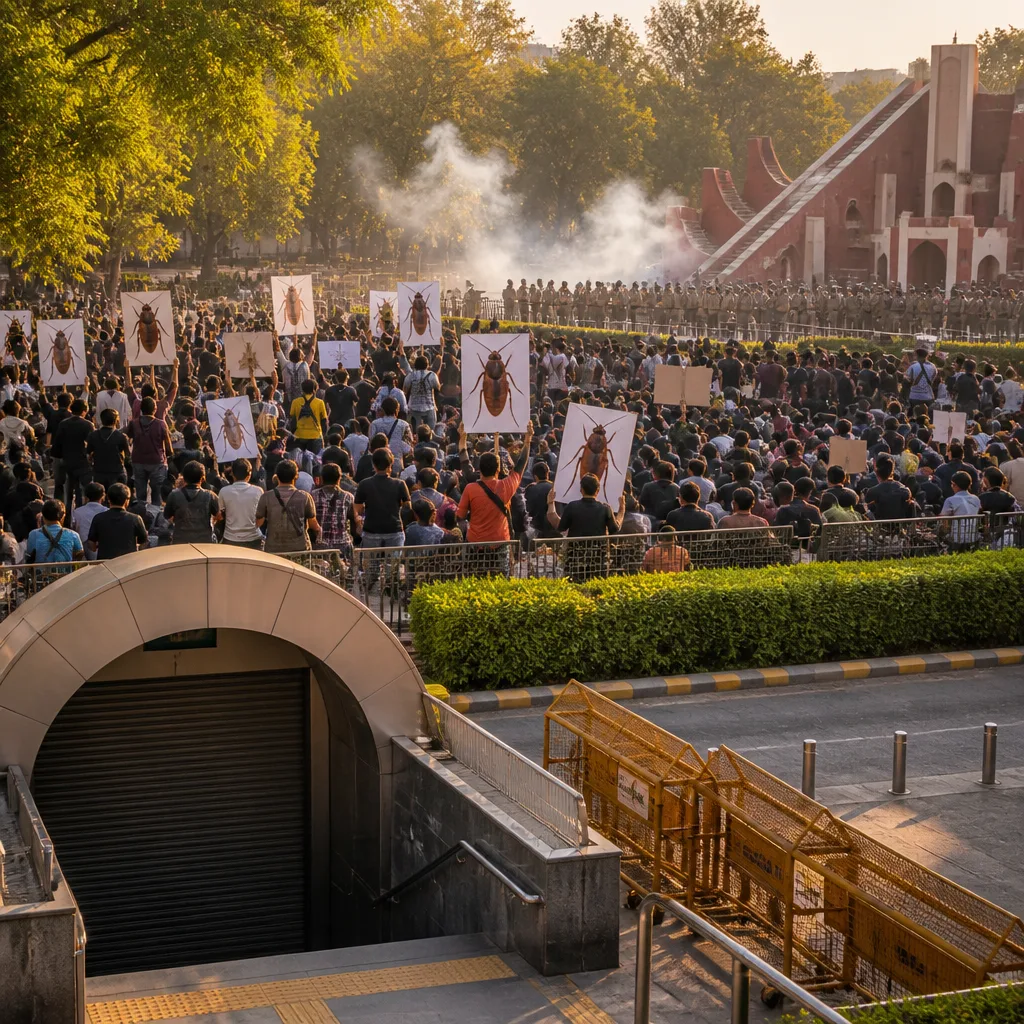
The announcement came as police used tear gas to disperse demonstrators at Jantar Mantar in New Delhi, hours before protest leaders were due to meet federal ministers for talks.
What the protests demanded
The demonstrations, organised and energised largely online, coalesced under the banner of the satirical Cockroach Janta Party (CJP). The movement had called for Pradhan’s resignation to hold political leadership accountable for a series of leaks affecting high-stakes entrance and school examinations — a grievance that resonated with thousands of young people preparing for competitive tests.
At Jantar Mantar, the CJP’s founder, Abhijeet Dipke, addressed supporters amid celebrations after the resignation was announced.
“We have done it,” said Abhijeet Dipke, to loud cheers at the protest site.
The CJP later posted on X that: “Cockroaches won… Democracy won!” Supporters reportedly celebrated at multiple locations across the country.
Government response and public order measures
Authorities had taken a series of precautions around the protest site. Internet access was reportedly restricted in the vicinity of Jantar Mantar and the capital’s transit network was affected, with 18 metro stations closed around the area to limit movement and assembly.
Security forces' use of tear gas to break up gatherings highlighted the tension between protesters and law enforcement even as ministers prepared to enter negotiations with movement leaders.
Broader significance and next steps
Pradhan’s resignation is being seen as the first notable policy concession by the Modi government in response to the countrywide demonstrations. The move may alter the shape of upcoming talks between protest leaders and federal officials, but it does not automatically resolve the underlying grievances that fuelled the demonstrations.
Protest organisers had framed their campaign around holding leaders accountable and demanding systemic reforms after a pattern of examination irregularities. While the resignation fulfils the central demand for one prominent figure to step down, participants and organisers may press for additional remedies and assurances aimed at preventing future leaks and protecting students’ careers.
- Key immediate facts: Dharmendra Pradhan resigned; announcement came on X; tear gas used at Jantar Mantar; internet restrictions and closures of 18 metro stations were reported.
- Main actors: Cockroach Janta Party and its founder Abhijeet Dipke; tens of thousands of student protesters; federal ministers and Prime Minister Narendra Modi as addressee of the resignation.
- Political context: The resignation constitutes a rare reversal for the ruling government and underscores the potency of youth-led mobilisation on education issues.
| Item | Detail |
|---|---|
| Resignation announced | Posted on X by Dharmendra Pradhan |
| Protest site | Jantar Mantar, New Delhi |
| Metro stations closed | 18 |
| Security measure | Tear gas used to disperse protesters |
As talks between protest leaders and government officials proceed, observers will be watching whether the resignation suffices to defuse national unrest or whether demonstrators will press for broader accountability and structural changes in examination administration. The developments also raise questions about how the government will address demands to restore confidence in the education system and protect students from the career and personal harms caused by leaked papers.
For now, the resignation marks a rare instance in which sustained youth mobilisation has elicited a concrete ministerial departure — a development likely to resonate in political and education circles across the country.