
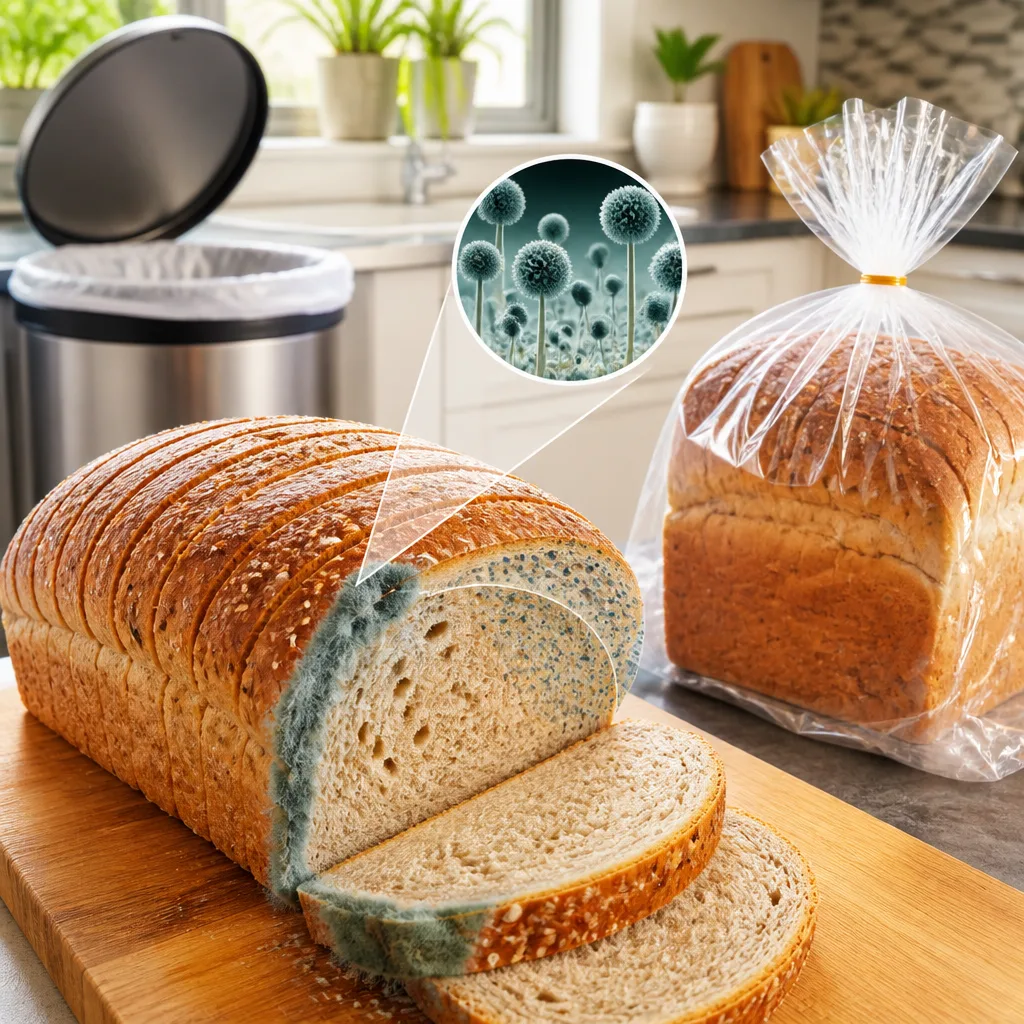
Discard any bread with visible mould, health experts and U.S. food-safety guidance say, because the problem often runs deeper than the fuzzy patch you can see. Bread’s texture and storage conditions allow mould to spread beyond the surface, and some moulds produce toxins that can cause illness.
Why a small spot can mean bigger contamination
Breads are nutrient-rich and retain moisture, which together create favourable conditions for fungi to grow. Moulds reproduce by releasing microscopic spores into the air; when these spores land on bread they can colonize the loaf and extend into the interior, even if you only notice a limited area of visible growth.
Grace Derocha, MBA, RD, CDCES, a spokesperson for the Academy of Nutrition and Dietetics, told Health that visible mould indicates the product has been colonized by fungi that may extend well beyond what is obvious at first glance. Because of that hidden contamination, food-safety authorities recommend against salvaging parts of a loaf by cutting away a mouldy slice.
Mould types and possible harms
Several species commonly appear on bread. The report cites
- Rhizopus nigricans — often seen as fluffy white growths with black spots;
- Penicillium expansum and P. stolonifer — which can form greenish clusters; and
- Aspergillus niger — noted for dark spore masses.
Not all moulds produce mycotoxins, but because there is no reliable way to identify harmless versus toxin-producing varieties by sight, experts urge caution. Mycotoxins can cause gastrointestinal symptoms and, in certain circumstances, more severe health effects — a particular concern for pregnant people, young children and other vulnerable individuals.
| Mould | Typical appearance |
|---|---|
| Rhizopus nigricans | Fluffy white growth with black spots |
| Penicillium spp. | Greenish spore clusters |
| Aspergillus niger | Dark/black spore masses |
Storage, preservatives and risk factors
Commercial breads often include additives designed to slow mould growth, but these protections are not absolute. Mould can still develop when bread is kept past its shelf life or stored in warm, damp places such as countertops exposed to sunlight. Homemade breads, which typically lack such preservatives, are especially likely to develop visible mould more quickly.
The porous crumb of most breads allows fungal threads to penetrate beyond the surface, which is why authorities advise disposing of the entire loaf rather than removing a single slice or scraping off visible growth. The U.S. Department of Agriculture (USDA) guidance cited in reporting underscores this point: when mould is visible on bread, throw it out.
Practical steps for consumers
- Inspect bread regularly and follow use-by or best-before dates.
- Store bread in a cool, dry place; refrigeration can slow mould formation but may affect texture.
- When you detect mould, discard the whole loaf rather than trying to salvage parts.
- Be particularly cautious with homemade bread and with loaves intended for infants, pregnant people or immunocompromised household members.
The guidance is rooted in prevention: because mould growth on bread is often more extensive than it appears, visible fuzz is a reliable signal that a product is no longer safe to eat.
“Mould can pose health risks beyond what is visible on the surface,”
That statement, made by the Academy of Nutrition and Dietetics spokesperson, summarises the caution urged by food-safety experts. Discarding mouldy loaves limits the risk of exposure to both the organisms themselves and any mycotoxins they may have produced, protecting household members who may be most vulnerable to adverse effects.
Consumers seeking to reduce waste should consider buying amounts they will consume within the bread’s shelf life or freezing portions for longer storage; freezing halts mould growth while preserving bread for future use.