Over-reliance on automated instruments in chemistry teaching risks depriving students of the hands‑on skills that underpin the discipline, a prominent analyst of analytical techniques told Times Higher Education this week.
Industry voice sounds alarm on practical skills
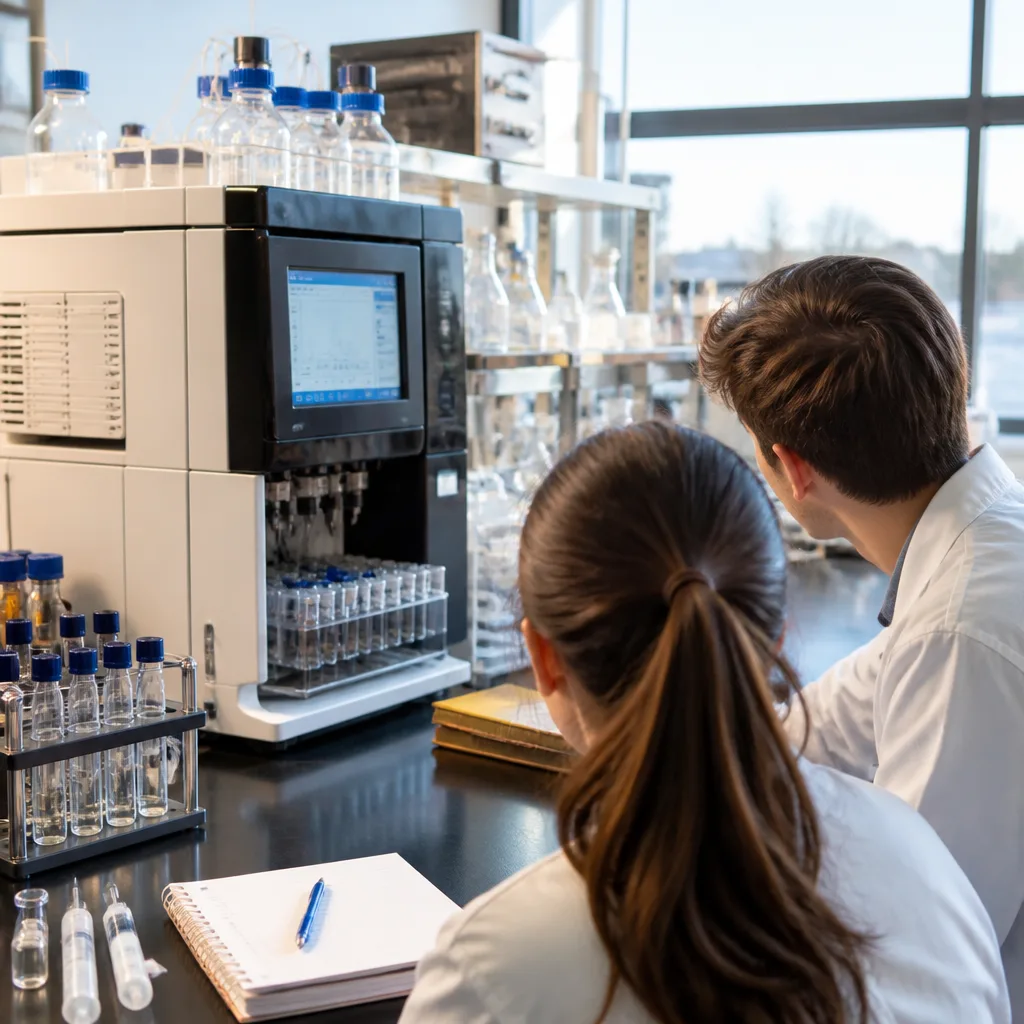
Tony Edge, president of the Chromatography Society and a former scientist at firms including AstraZeneca, said many undergraduates are being trained to operate modern equipment at a superficial level: loading samples, pushing a button and watching results on a screen rather than engaging with the apparatus and its scientific principles.
“If we’re not careful, we’re going to get rid of some very good science that underpins a lot of UK manufacturing,”
Edge singled out chromatography — a set of laboratory techniques used to separate mixtures into component parts — as an area where practical understanding appears to have diminished. He recalled encountering students in industry placements, from about the mid‑2000s onward, who lacked the practical experience he expected.
Academic response stresses balance, not collapse
Not all educators are convinced that a skills crisis is under way. Ben Arenas, a lecturer in physical chemistry education at the University of Edinburgh, acknowledged the need to preserve foundational techniques but said that UK university chemistry training remains strong overall.
Arenas emphasised that technological fluency and traditional hands‑on methodology are both important, and that it falls to educators to ensure students appreciate what lies behind the instrument readouts.
He pointed to examples of good practice in physical and analytical chemistry teaching, including opportunities at Edinburgh for students to conduct gas chromatography experiments that expose them to the mechanics and interpretation involved.
Where the debate matters
The exchange highlights a tension common across modern STEM programmes: how to integrate advanced, industry‑relevant instrumentation with the tactile, conceptual training that fosters deep technical judgement. Employers in manufacturing, pharmaceuticals and research often expect graduates to combine both sets of capabilities.
- Industry concern: Equipment use without conceptual grounding may weaken practical skills and reduce readiness for hands‑on tasks.
- Academic view: Technology enhances learning but educators must deliberately teach the underlying chemistry and physics.
- Teaching implication: Curricula need design choices that give students experience with method as well as machine.
While the discussion in the source material centred on the United Kingdom, the issues raised are relevant to Canadian post‑secondary institutions as they update laboratory curricula and negotiate partnerships with industry. Balancing automation and manual technique affects not only skill acquisition but also students’ ability to troubleshoot, design experiments and interpret unexpected results.
| Perspective | Key point |
|---|---|
| Tony Edge (Chromatography Society) | Practical skill sets are diminishing as students rely on automated instruments. |
| Ben Arenas (Univ. of Edinburgh) | UK chemistry teaching remains world‑class; educators must preserve balance. |
Consequences for curriculum and employers
Program directors and departments will need to consider how laboratory assessments, placements and capstone projects can demonstrably test manual dexterity, experimental design and instrument understanding, not only data analysis. For employers, a graduate’s ability to explain what happens behind the buttons may be as important as the ability to operate software dashboards.
The debate also has implications for how equipment is purchased, staffed and scheduled. Ensuring access to bench space, sufficient supervised lab time and instructors skilled in both traditional and digital techniques will be necessary if institutions choose to act on the concerns voiced.
Ultimately, the conversation brings into focus a simple educational question: how to prepare students for a technologically advanced workplace without sacrificing the experiential learning that cultivates confident, independent scientists.