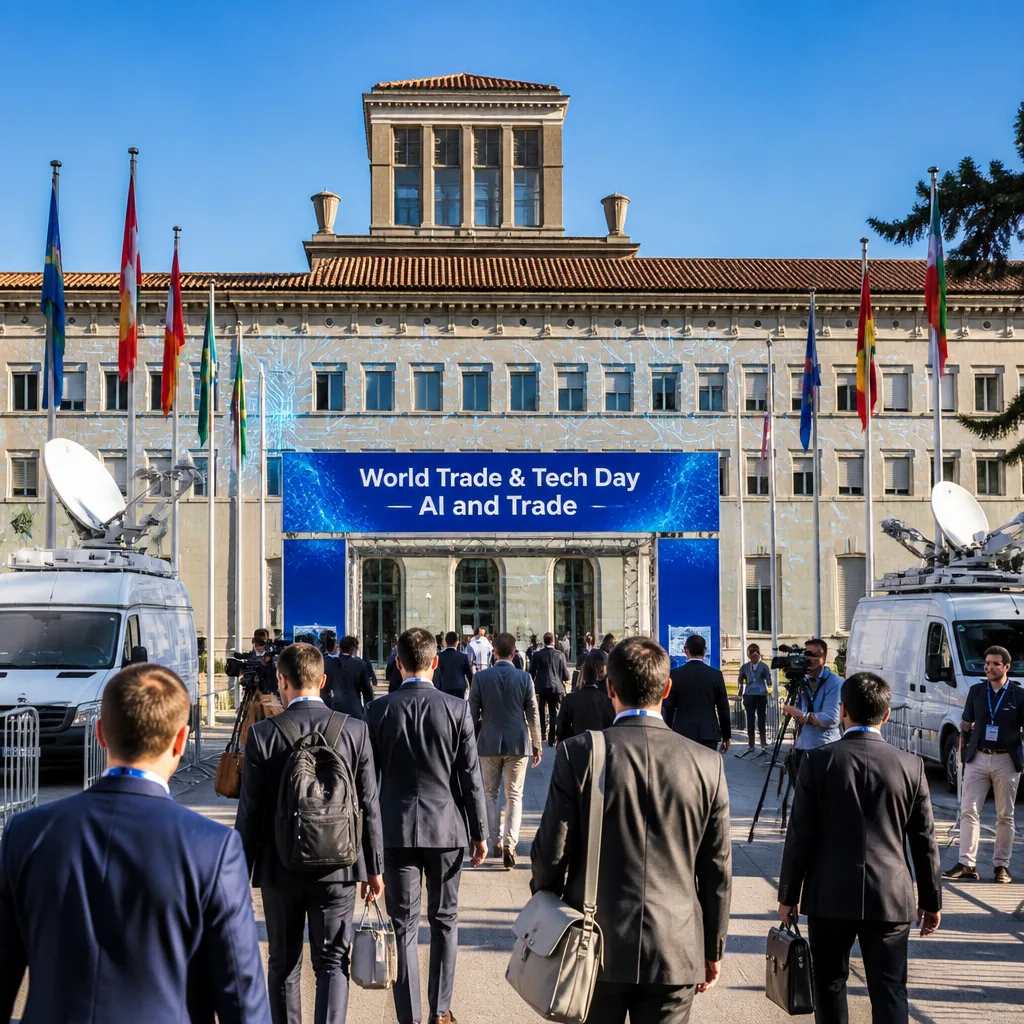
The World Trade Organization will hold its first World Trade and Tech Day on Sept. 14 at its Geneva headquarters to focus attention on how artificial intelligence can be made to serve international trade and development objectives.
Putting AI on trade policy agendas
Designed under the theme “AI and Trade: Turning Potential into Progress,” the one‑day event will gather trade officials, information and communications technology policymakers, business leaders and other stakeholders. Organisers say the goal is to surface practical policy approaches for countries seeking to capture the economic opportunities that AI promises while addressing potential downsides.
The programme includes a welcoming address by WTO Director‑General Ngozi Okonjo‑Iweala, a ministerial dialogue on why AI matters for trade policy, a fireside chat with private‑sector figures and a high‑level keynote. Panels will look at topics such as reducing trade costs with AI, integrating developing economies into AI value chains, digital trade in services, intellectual property and the role of standards. The day will also feature an exhibition and a pitching session showcasing concrete AI case studies in trade.
Why the WTO is acting now
The WTO is framing the event around recent analytical work that attempts to quantify AI’s macroeconomic potential. Its World Trade Report 2025 estimates that, under certain conditions, AI could lift global gross domestic product by about 13 per cent and expand world trade by as much as 37 per cent by 2040.
Those projected gains are conditional. The WTO cautions that unequal adoption of AI technologies, disruption to labour markets and an uneven distribution of benefits could blunt or reverse positive outcomes unless governments and international organisations craft complementary policies.
For Canada, the issues on the agenda mirror domestic concerns: how to maintain competitiveness in digital services, protect workers during technological transition and ensure small and medium enterprises can participate in digital trade. The Geneva meeting will be an early opportunity for governments to compare notes on regulatory approaches, standards and capacity‑building measures.
- Event: World Trade and Tech Day
- Date: Sept. 14
- Location: WTO headquarters, Geneva (with online participation)
- Focus: AI's implications for trade policy, development and regulation
Trade policy levers and the debate over rules
Speakers will debate how trade policy tools — from intellectual property regimes to standards and services commitments — can be adapted for an AI‑led economy. Questions likely to surface include how to measure AI’s contribution to trade, which regulatory settings encourage adoption without widening inequality, and what multilateral institutions can do to help lower‑income countries engage in AI supply chains.
Observers say the WTO’s convening role is important because AI’s cross‑border effects touch on many policy domains: data flows, privacy regimes, labour rules and competition policy, among others. The organisation’s neutral forum could help reduce fragmentation by promoting shared principles and exchange of experience.
In addition to in‑person attendance, the WTO is offering online participation and has posted the full programme and registration details on its event page. Officials say the format — combining high‑level discussion with concrete case studies and a pitching session — is intended to stimulate both policy thinking and practical partnerships.
How governments respond to the issues raised at Geneva will influence whether AI’s economic promise translates into broader prosperity or deepens existing divides. The WTO event sets out to move that debate from theoretical potential toward policy pathways that produce measurable progress.