Terminal, a telematics integration company and Y Combinator alumnus, has closed a $20 million Series A financing round led by Battery Ventures to scale its commercial-vehicle data infrastructure for insurers, fleet managers and logistics firms.
Funding, backers and stated plans
The round includes new strategic investors Intact Private Capital and Penske, alongside returning backers Y Combinator and Wayfinder Ventures. The company says the latest investment brings its total raised to $26 million since founding and will be used to expand its enterprise footprint across core markets.
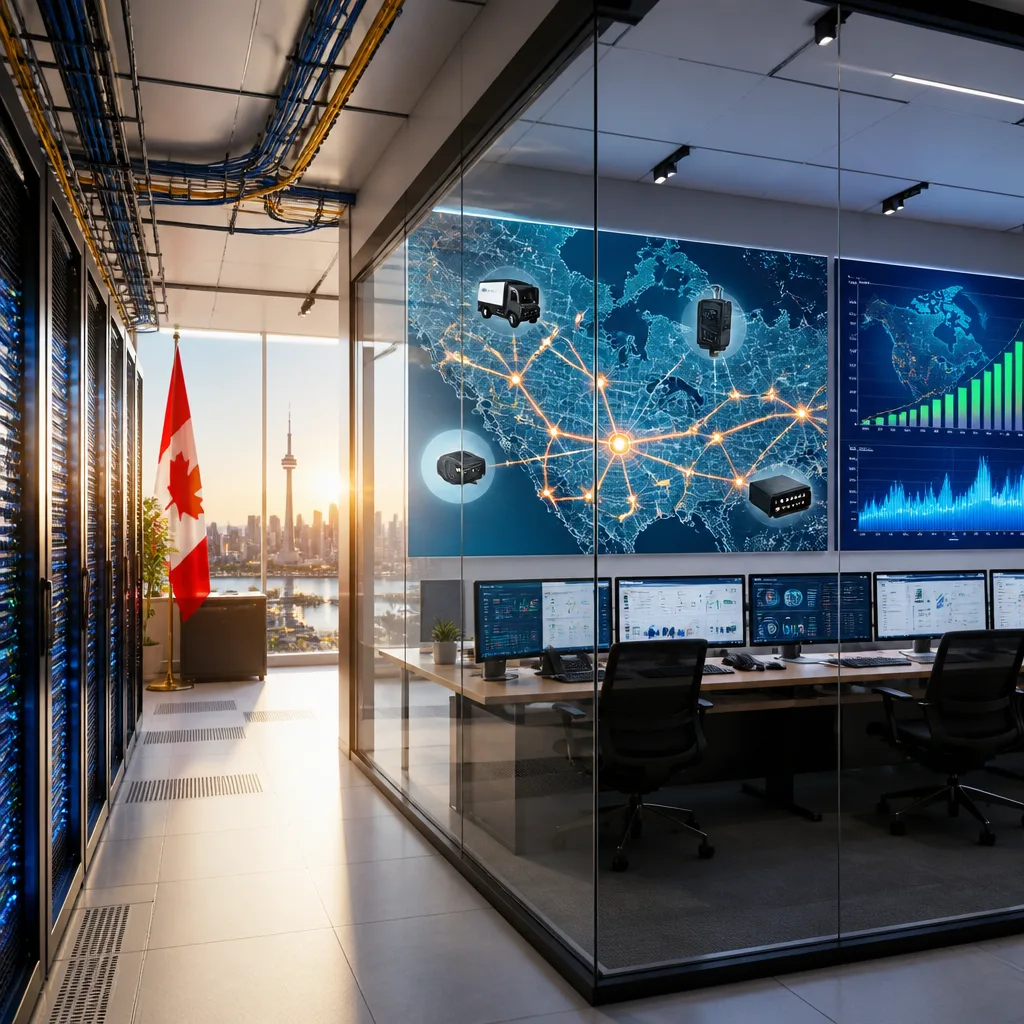
Terminal describes its product as an integration layer that collects and standardizes data from a wide range of vehicle devices — including electronic logging devices (ELDs), dashboard cameras, OBD-II readers and GPS trackers — and makes that information available to large commercial customers.
Why insurers and fleets are paying attention
The firm positions itself at the intersection of transportation and telematics data, arguing that continuous streams of vehicle-level information such as location, speed, fuel consumption and maintenance status are increasingly central to safety programmes, regulatory compliance and underwriting decisions. The company says these data points help companies manage risk and comply with growing regulatory and operational demands.
"Telematics data is three times more predictive of future risk than any other underwriting variable, yet fragmentation has kept that value out of reach for fleet managers and insurance companies until now," said Marcus Ryu, a Battery Ventures general partner and the former CEO of Guidewire Software, who is joining Terminal's board.
Terminal claims adoption among major insurers and Fortune 500 fleet operators, presenting itself as the integrator of choice for enterprises that must aggregate heterogeneous telematics feeds into usable signals.
What's at stake
The promise of more granular telematics data is compelling: insurers can potentially underwrite more precisely, fleet operators can improve safety and reduce costs, and regulators can better monitor compliance. But the industry challenge the company highlights is fragmentation — dozens or hundreds of device vendors and data formats make large-scale, consistent ingestion and interpretation difficult.
- Core problem: heterogeneous device outputs from ELDs, dash cams, OBD-II and GPS devices.
- Proposed solution: a unified integration layer to normalise and deliver telematics signals to enterprise systems.
- Target customers: insurers, fleet management firms and logistics operators, including major enterprises.
| Metric | Value |
|---|---|
| Series A amount | $20 million |
| Total funding to date | $26 million |
| Lead investor | Battery Ventures |
Battery Ventures’ participation — and the appointment of Marcus Ryu to Terminal’s board — is notable given his experience at Guidewire, a company that supplies core systems to insurers. That background emphasises the investment thesis linking telematics signals to underwriting accuracy.
Questions that remain
While Terminal’s fundraising is a concrete sign of investor confidence, several practical and policy questions persist. The company must demonstrate it can reliably normalise and scale ingestion from a fragmented device ecosystem, prove that aggregated signals translate into actuarial improvements at scale, and navigate data governance, privacy and cross-border transfer concerns that accompany vehicle telematics.
For Canadian insurers and fleet operators, solutions that make telematics data actionable could alter pricing, risk management and fleet operations. But adopting a third-party integration layer also raises procurement, security and regulatory scrutiny. How firms weigh the promised lift in predictive accuracy against those operational and compliance considerations will determine how broadly the model spreads.
Terminal’s new capital and strategic backers give it runway to pursue those demonstrations with enterprise customers. Whether that leads to widespread transformation across insurance underwriting and commercial fleet management remains to be proven, not assumed.