
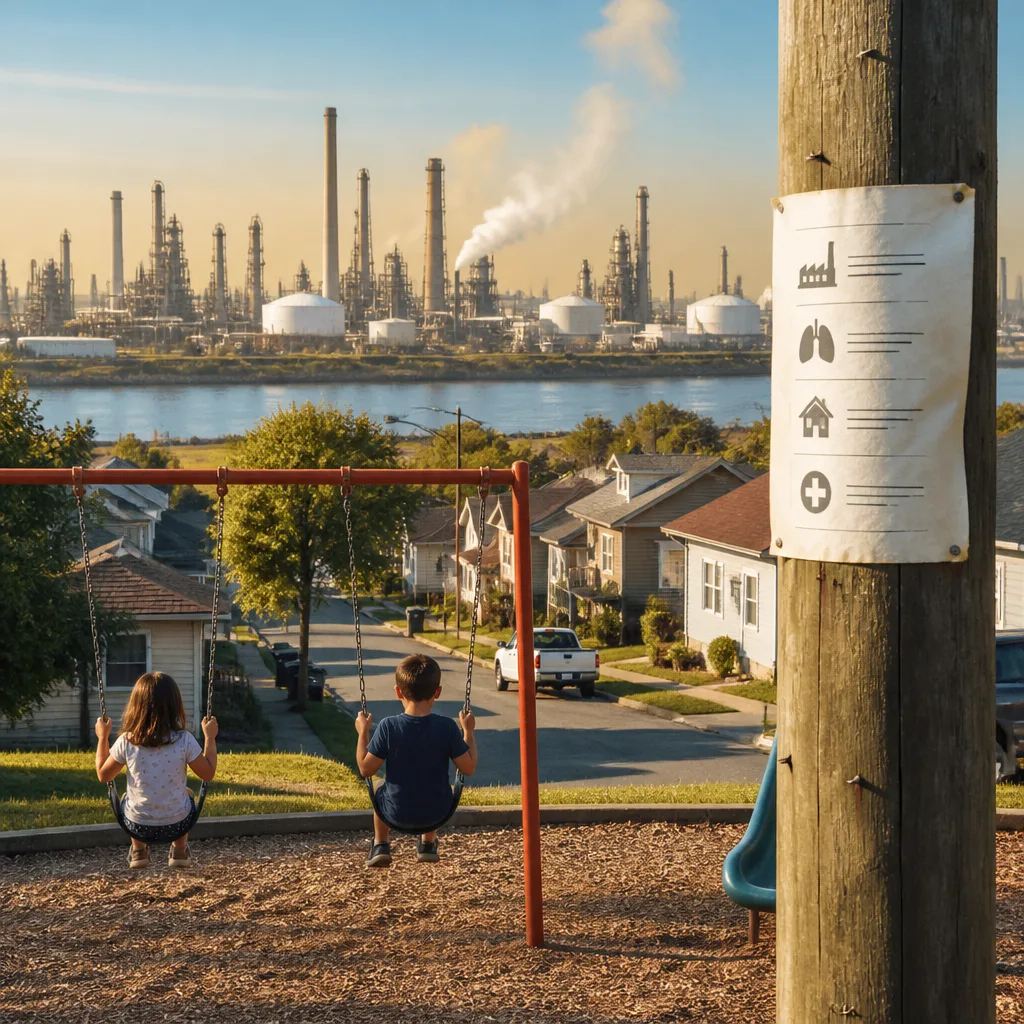
An analysis of Louisiana Medicaid records has identified higher rates of several health conditions among people living near petrochemical plants and petroleum refineries, according to researchers involved in the Collaborative Data Analysis Environmental Health Study.
Large administrative data set links proximity to illness
Researchers from Virginia Tech, Dillard University and the University of California examined anonymized Medicaid claims from 2017 to 2019 focusing on nonsmokers and found that living close to industrial facilities was associated with elevated health risks for both children and adults. The analysis covered communities across the state, including New Orleans, Baton Rouge, the River Parishes, Alexandria, Lake Charles and Shreveport.
The study responds to long-standing concerns among residents of the 85-kilometre stretch along the Mississippi River often described as “Cancer Alley,” where petrochemical plants and refineries are concentrated. The research team emphasised that Medicaid data represent a substantial portion of the state’s population: roughly 40 per cent.
“This data is irrefutable,” said Barbara Allen, a Virginia Tech professor and Louisiana native who co-led the study.
Conditions identified and who is affected
By analysing health records, the team reported that children living within five miles (about eight kilometres) of a petrochemical plant or petroleum refinery were more likely to receive diagnoses for:
- learning disabilities
- nutritional anaemia
- skin conditions such as eczema and dermatitis
The study also reported elevated rates of other health conditions among adults and children in areas with higher levels of industrial pollution, though the source material highlights the child-specific findings for the listed conditions.
| Population | Observed elevated conditions |
|---|---|
| Children within five miles of plants/refineries | Learning disabilities; nutritional anaemia; eczema and dermatitis |
| Adults and children in high-pollution areas | Multiple elevated health risks (study identifies several conditions) |
Objectives and implications
The research team said the goal of the project is to provide robust evidence that can inform public-health research and policy. They intend the approach to serve as a model that other communities can adopt to study environmental health risks using administrative health data.
Barbara Allen, a professor in Virginia Tech’s Department of Science, Technology, and Society and a Louisiana native, has been studying and warning about pollution-related health risks in the region for more than two decades. The recent analysis, she said, strengthens claims by residents who have long reported patterns of illness they believe are linked to industrial emissions.
By relying on a large sample of Medicaid records, the researchers argue the study adds weight to community reports and clinical observations and could support targeted public-health interventions and policy decisions in heavily industrialised regions.
The Collaborative Data Analysis Environmental Health Study used anonymized government data covering 2017–19 Medicaid claims among nonsmokers to produce its findings. The researchers emphasised the scale of the data set and its potential for informing environmental health research and policy-making.
Further analyses may be needed to explore causal pathways, exposure metrics and the full range of health outcomes associated with industrial pollution, but the study provides a statistically powerful snapshot consistent with long-standing community concerns.