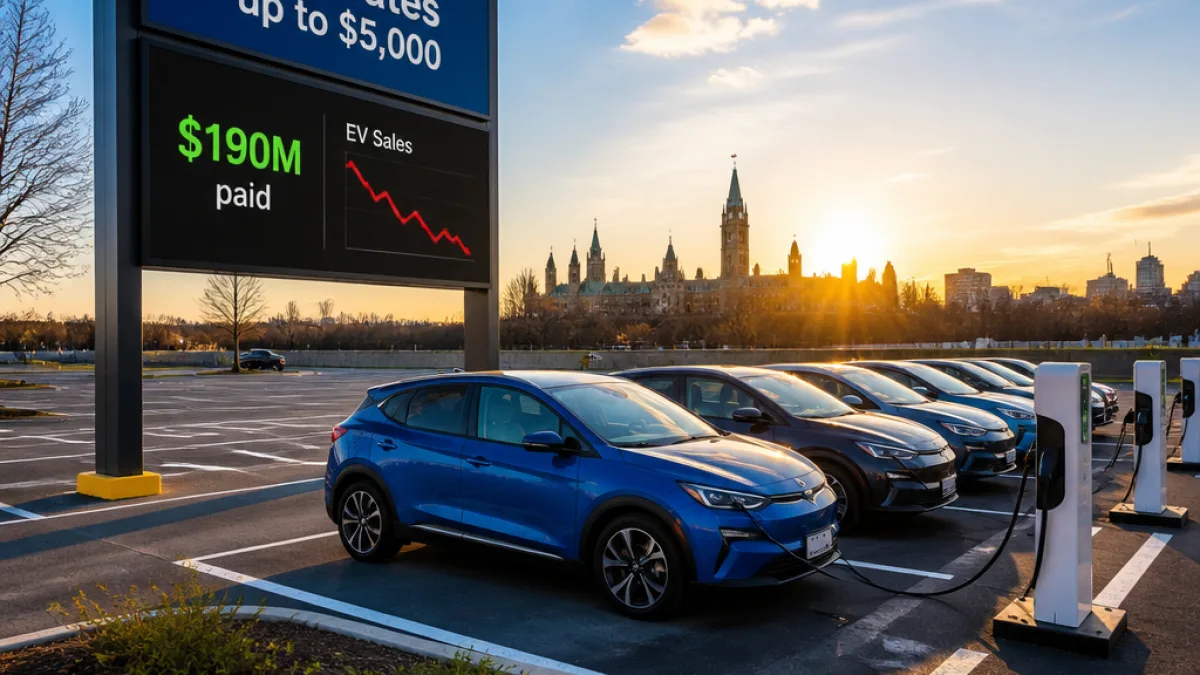
OTTAWA — Federal data released this month show Ottawa’s taxpayer-supported electric-vehicle incentive is paying out: more than $190 million has been claimed nationwide so far this year, even as the share of new-vehicle purchases that are electric has eased.
Program scale and recent uptake
Transport Canada reported 44,315 rebate claims recorded through June. The federal government relaunched the incentive earlier this year, assigning $2.275 billion to the program, funding meant to last up to five years.
Under the re-established framework, buyers of qualifying new battery-electric vehicles can receive up to $5,000 toward a purchase, while purchasers of plug-in hybrid electric vehicles are eligible for up to $2,500. The rebates generally apply only to vehicles priced below $50,000, although vehicles assembled in Canada are exempt from that price cap. At present, the Transport Canada data note that the Dodge Charger and the Chrysler Pacifica meet that Canadian-made exemption.
Sales trend and federal targets
Statistics Canada figures cited alongside the Transport Canada release show electric vehicles represented 9.6 per cent of new-vehicle sales in both April and May. That is down from about 12 per cent in the month immediately after the rebate returned.
The federal program includes an ambition to add 840,000 new electric vehicles to Canadian roads over its lifetime by making purchases more affordable with the rebates.
- Claims through June: 44,315
- Amount paid so far this year: more than $190 million
- Program allocation: $2.275 billion (up to five years)
- Rebate amounts: up to $5,000 (EVs); up to $2,500 (plug-in hybrids)
- Price cap: $50,000 (with Canadian-made exemptions)
| Metric | Value |
|---|---|
| Claims to June | 44,315 |
| Federal payout (so far this year) | More than $190 million |
| Program funding | $2.275 billion |
| Target additional EVs | 840,000 |
| EV share of new sales (Apr–May) | 9.6% |
“Canadians have claimed more than $190 million in federal subsidies this year toward purchases of new electric vehicles,” Transport Canada data show.
What this means for Ottawa drivers and market dynamics
For Ottawa residents, the numbers underline a few practical consequences. The rebate reduces the upfront cost of eligible new electric vehicles, which can influence purchase decisions for households weighing total cost of ownership, local commuting patterns and access to charging infrastructure. A retreat from the immediate post-rebate spike in market share — from about 12 per cent down to 9.6 per cent of new sales — suggests the early surge may have reflected pent-up demand or dealer inventory timing rather than a steady, sustained increase.
Municipal planners and utilities in Ottawa will be watching closely. Reduced velocity in new-EV purchases could slow short-term pressure on public and multi-unit residential charging needs, but the federal target of 840,000 additional EVs implies continued long-term growth that will affect road use, electricity demand and parking policy.
Dealers and consumers also face the $50,000 vehicle-price threshold for eligibility, with the Canadian-assembly exemption available only to specific models at present. That limitation can shape the mix of models Ottawa drivers consider when shopping for a new vehicle with a rebate in mind.
Next steps and context
The federal fund is intended to span several years, leaving room for future shifts in uptake as supply, vehicle model availability and consumer sentiment evolve. For Ottawa’s civic decision-makers, the data provide an early measure of how incentives translate into purchases locally — a key input when planning charging networks, zoning for electric-ready parking and broader transportation strategies.
As the rebate program continues, further monthly and quarterly data releases from Transport Canada and Statistics Canada will give a clearer picture of whether the modest dip in EV share is a short-term correction or the start of a different trend in Canadian vehicle markets.