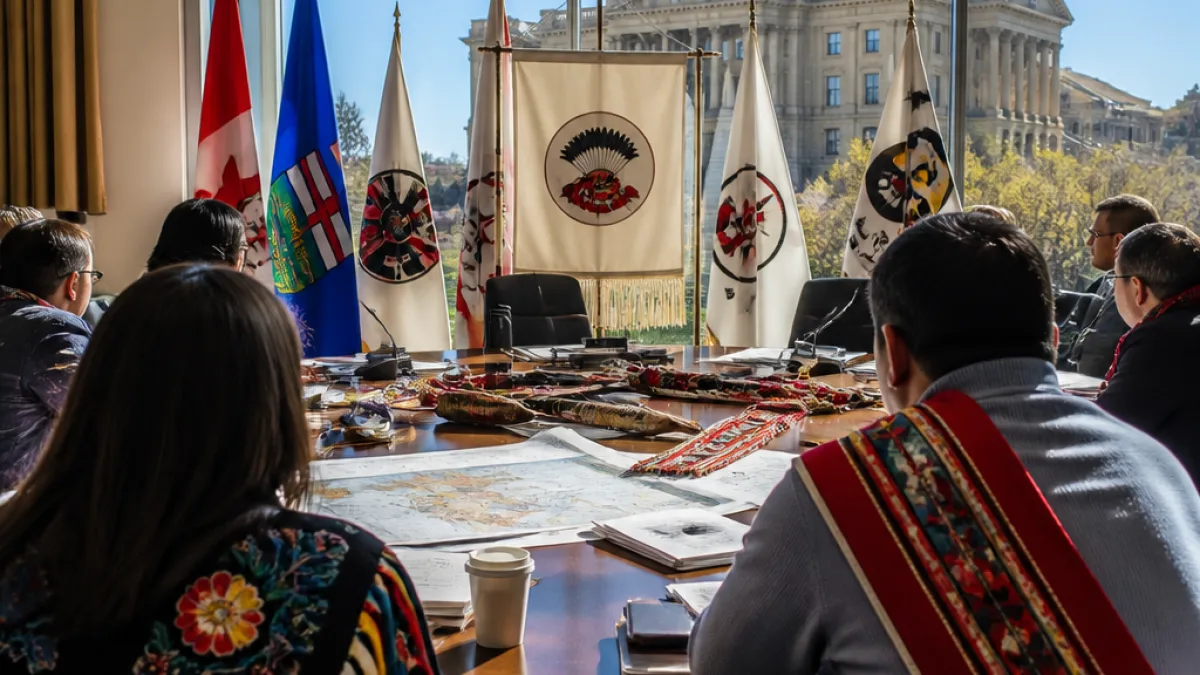
Leaders from Alberta’s treaty nations and the Assembly of First Nations Quebec-Labrador have united to oppose a rising separatist movement in Alberta, saying the debate must not proceed without meaningful consultation on treaty rights.
AFNQL backs Alberta chiefs
The Assembly of First Nations Quebec-Labrador (AFNQL) attended an emergency meeting at the national Assembly of First Nations (AFN) that resulted in a resolution opposing Alberta separatism. The meeting followed a July 13 gathering between AFNQL and chiefs representing Treaty 6, Treaty 7, Treaty 8 and the Blackfoot Confederacy.
AFNQL regional chief Francis Verreault-Paul said the outreach reflected a desire among Alberta chiefs to draw on the Quebec region’s experience with separatist movements.
“It’s a strong position of support to our sisters and brothers from Alberta because they made it clear what their stance is. I think with First Nations, we need to support each other,”
Verreault-Paul characterised the meeting as a first, historic step in cross-regional cooperation on an issue that has legal and political implications for treaty rights.
Context: provincial referendum and legal concerns
The push for discussion comes after Alberta Premier Danielle Smith announced in May that the province would proceed with a non-binding referendum question related to separation from Canada. That announcement followed judicial scrutiny earlier this year, when a court struck down a petition seeking a more direct referendum on separation on grounds that it failed to consult First Nations.
Indigenous leaders say the episode highlights the centrality of treaty rights and consultation when constitutional or territorial questions are raised. The AFN emergency resolution opposing separation underscores concern that any shift in provincial status could affect constitutionally guaranteed Indigenous rights.
What the chiefs want
While the AFN resolution and the AFNQL statement did not set out a list of demands in the statements released publicly, chiefs involved in the July meeting sought support and solidarity from AFNQL based on prior experience with separatism in Quebec. The collaboration is intended to ensure Indigenous perspectives are considered in any provincial discussion that might alter jurisdictional arrangements.
- Recognition of treaty consultation as a prerequisite for provincial referendum processes that could affect Indigenous rights.
- Inter-regional coordination between Indigenous organisations to share experience and legal resources.
- Visibility and public messaging to ensure Indigenous concerns are part of broader public debate on separation.
Who participated
The July meeting brought together chiefs from the principal treaty areas covering much of Alberta and the AFNQL, reflecting an outreach across provincial lines.
| Group | Role |
|---|---|
| Treaty 6, Treaty 7, Treaty 8 | Chiefs attended July meeting to discuss separatism and treaty implications |
| Blackfoot Confederacy | Participating chiefs raised concerns about consultation and rights |
| AFNQL | Regional support and shared experience from Quebec |
| AFN (national) | Passed emergency resolution opposing Alberta separation |
Implications for provincial politics
The intervention by Indigenous organisations comes amid a politically charged atmosphere in Alberta. The province’s leadership has signalled an appetite to test public sentiment on separation — but legal advisers and courts have already flagged the need to consult Indigenous peoples when questions touch constitutional arrangements.
That dynamic has practical consequences: a referendum or political movement that proceeds without consultation could face legal challenges, delayed implementation, and heightened tensions with Indigenous governments that represent treaty rights holders.
Next steps and public interest
For now, the matter is being handled at the level of Indigenous political organisations and provincial political debate. The AFN emergency resolution represents a formal national-level stance opposing Alberta separation, while AFNQL’s participation signals interprovincial Indigenous co-operation.
How the provincial government responds to those concerns is likely to shape the next phase of the debate. Indigenous leaders have made clear they expect to be at the table for any discussions that could alter the relationship between Alberta and Canada.
As this issue unfolds, Albertans will need to watch for further statements from the provincial government, the AFN and the treaty nations involved. Any movement toward a referendum or similar process will raise constitutional, legal and practical questions that extend beyond party politics to the core of treaty obligations and Indigenous rights.
Andriy Kovalenko, NEXO RADAR