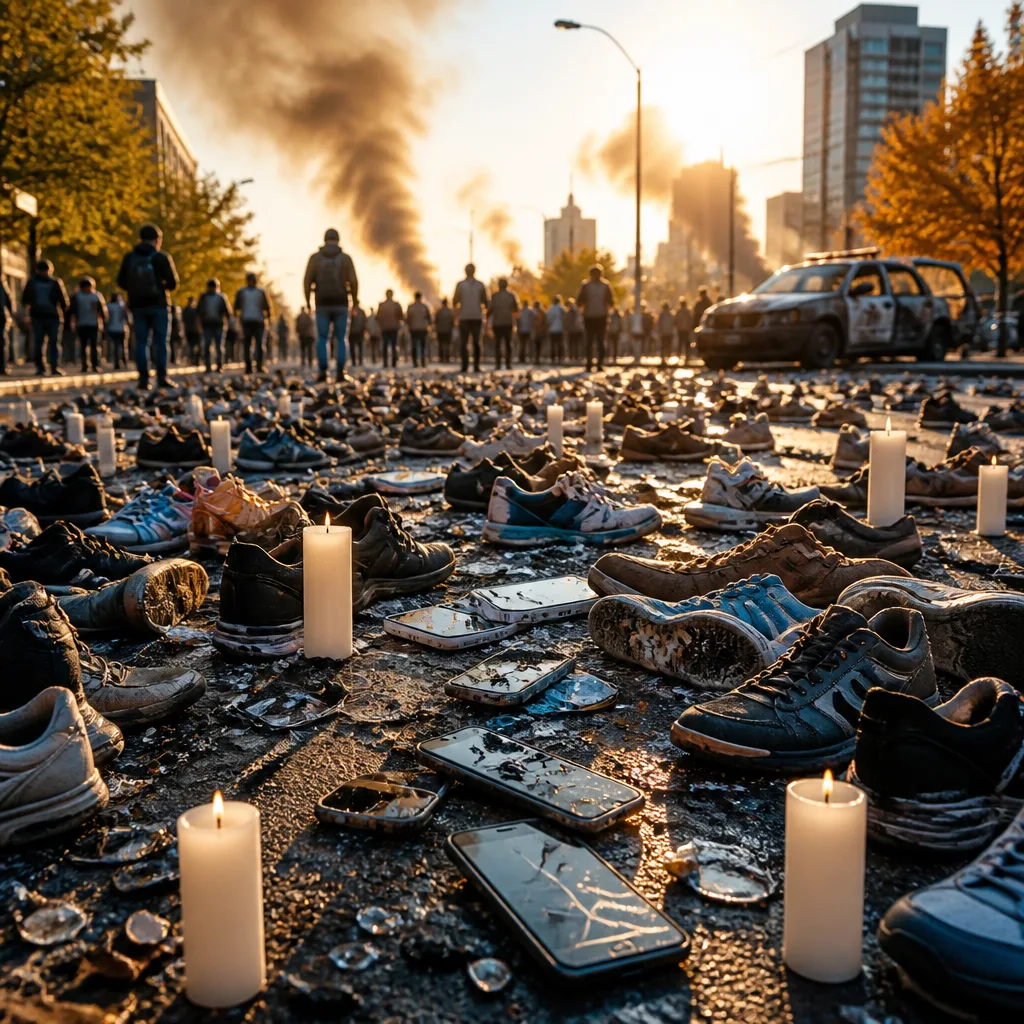
At least 7,000 people were confirmed killed over the course of two days during a government crackdown on domestic protests in Iran, human rights groups say, and they warn the true toll could be closer to 20,000. The violent repression — carried out against demonstrators who had called for an end to the country’s 47‑year‑old theocratic system — was later cited by the U.S. government as one of the justifications for military action that has evolved into an ongoing war.
Scale of the killings and limits on information
International monitors and rights organisations continue to characterise the episode as one of the deadliest suppressions of domestic dissent in recent history. Accurate accounting of casualties and arrests has been hampered by widespread internet shutdowns and persistent fears of retribution against witnesses and victims’ families, leaving investigators dependent on fragmented eyewitness testimony and limited on‑the‑ground reporting.
The lack of reliable, independently verifiable data complicates humanitarian assessments as well as diplomatic responses. Governments and non‑governmental organisations seeking to document abuses face obstacles ranging from communication blackouts to intimidation in communities affected by the crackdown.
How the incident factored into broader conflict
U.S. officials referenced the crackdown as part of their public rationale for initiating military operations against Iran. That intervention has not produced a rapid resolution; instead, the conflict continues to drag on, with consequences for regional security and international relations.
Independent analysts say the linkage between domestic repression and international military action underscores how large‑scale human rights violations can be used to mobilize foreign policy decisions. The situation illustrates the difficulties democracies face when assessing the credibility of casualty claims and when weighing the risks of military engagement.
Humanitarian and accountability questions
The episode raises urgent questions about accountability, access to justice and the protection of civilians. Human rights groups have urged international mechanisms to investigate the killings and to secure reliable documentation before evidence can be lost or further suppressed.
- Confirmed deaths: 7,000 (human rights groups)
- Estimated higher toll: Up to 20,000 (human rights groups’ warning)
- Protest demands: End to the 47‑year‑old theocratic regime
- Information barriers: Internet blackouts and fear of retribution
Observers caution that humanitarian access and protections for witnesses are essential for any credible inquiry. Without them, efforts to establish responsibility for abuses — and to pursue legal or sanctions‑based responses — will remain constrained.
| Measure | Reported figure |
|---|---|
| Confirmed deaths over two days | 7,000 |
| Estimated possible deaths | Up to 20,000 |
| Years since establishment of theocratic system | 47 years |
Diplomats, human rights advocates and legal experts will likely debate next steps: whether to pursue international investigations, to expand sanctions, or to seek other avenues of accountability. For countries weighing their responses, the difficulties in verifying casualties will be a central consideration.
For families and communities inside Iran, the immediate concern remains safety and the preservation of memory. For the international community, the episode is a test of its capacity to document mass abuses under conditions of obstruction and to translate evidence into effective policy measures without exacerbating civilian suffering.
The continuing war tied to these events underscores that the repercussions of severe domestic repression can extend far beyond national borders, shaping strategic decisions and humanitarian needs on a regional and global scale.