Residents who swim, surf or spend time on beaches have seen rising coverage about bathing water safety. A recent review of public guidance focused on Devon and Cornwall — two counties in south‑west England with many designated bathing sites — highlights how monitoring is done, the limits of that testing and practical ways the public can check conditions before taking a dip.
What affects bathing water quality?
Bathing water is influenced by several independent factors that can raise levels of bacteria and the associated health risks. According to the report, common contributors include:
- Sewage spills from treatment works or combined sewer overflows;
- Heavy rain that causes runoff and sewer overflows;
- Agricultural runoff carrying nutrients and microbes into rivers and coastal waters;
- Urban pollution from storm drains and surface run‑off; and
- Wildlife populations that can increase bacterial counts naturally.
Those bacteria — notably Escherichia coli (E. coli) and intestinal enterococci — are used as indicators of faecal contamination. The presence of elevated levels can increase the chance of stomach illness, cramps, vomiting and diarrhoea for swimmers.
How monitoring and ratings work
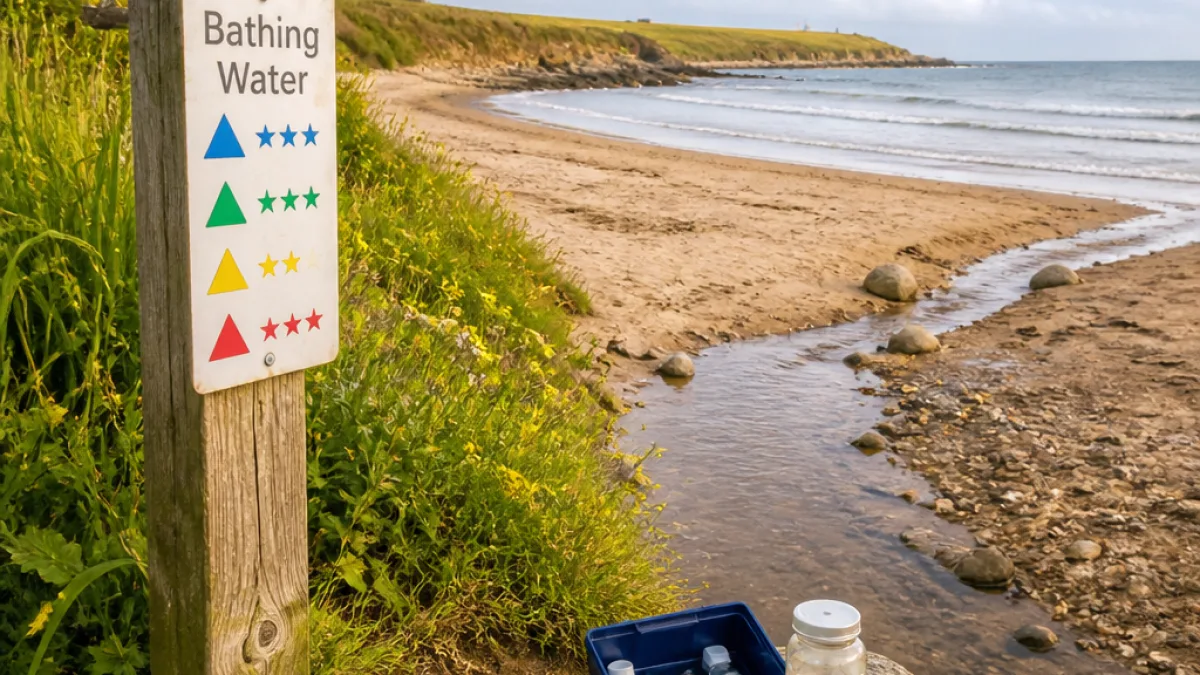
The Environment Agency, the regulator named in the guidance, assesses designated bathing waters using laboratory testing of samples for E. coli and intestinal enterococci collected over a four‑year rolling period. Sites are then given a rating from excellent to poor, which aims to describe long‑term water quality rather than day‑to‑day conditions.
Important caveats noted in the material include:
- Testing occurs only during the official bathing season, which runs from 15 May to the end of September;
- Only sites that have been formally designated as bathing waters are routinely sampled;
- The four‑year rating helps inform choices about which beaches typically perform well but does not guarantee that the water at a given site is safe on any particular day;
- A sewage spill does not necessarily mean a site’s long‑term rating will change, though spills can affect short‑term conditions.
Where the public can find information
The guidance points people to public tools that compile monitoring data and alerts:
| Tool | Purpose |
|---|---|
| Environment Agency ratings | Long‑term ratings (excellent to poor) based on four‑year sample records |
| Swimfo website | Public access to bathing water classifications and site information |
Those resources are designed to help beach users decide where to visit, but they do not replace day‑of monitoring or local signage. The report underlined that conditions can change quickly, particularly after heavy rainfall or following reported sewage incidents.
"The testing regime helps build a detailed, accurate long‑term profile of a site to inform the public's decision of where to visit," the report notes.
What this means for people who swim or visit beaches
For anyone planning to swim, paddle or take children to the shoreline, the key practical points are these:
- Check recent local reports and any posted signage at the beach on the day of your visit;
- Consult public websites for the long‑term rating to choose beaches that repeatedly test well;
- Be extra cautious after heavy rain or if you learn of a sewage discharge nearby — water can be unsafe even at beaches with good long‑term ratings;
- If you become unwell after swimming, seek medical advice and report the illness to local public‑health authorities.
The guidance was prepared in the context of a region — Devon and Cornwall — noted to contain more than a third of England’s designated bathing waters, including well‑known sites such as Sennen Cove and Fistral. While the monitoring system described is specific to England’s Environment Agency arrangements, the principles — indicator testing, seasonal sampling and the distinction between long‑term ratings and day‑to‑day risk — are useful for anyone who uses coastal waters, including those who live in or travel from Canada to coastal UK regions.
Local beachgoers should treat long‑term ratings as a decision tool but rely on up‑to‑date local information before entering the water.