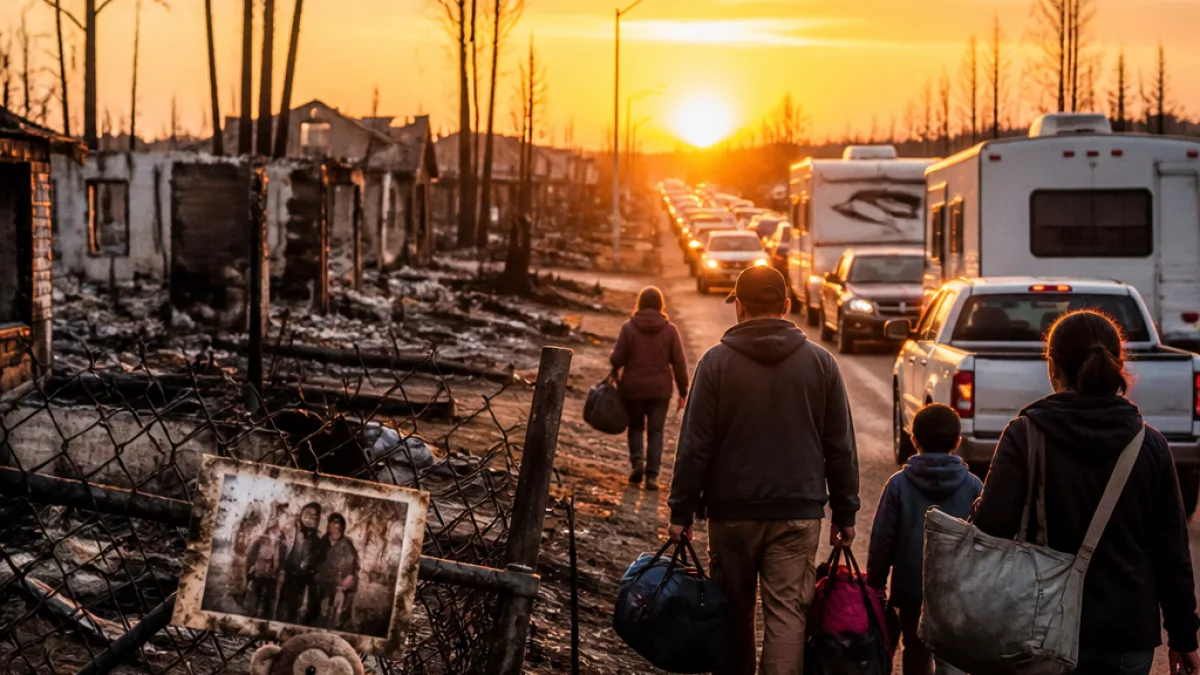
As families in other provinces continue to cope with evacuation and displacement from wildfires, a Fort McMurray resident who lost her home in the city’s 2016 blaze is urging people to prioritise safety and follow direction from emergency services.
Obey evacuation orders, protect lives first
Terese Greenwood, whose house burned to the ground during the 2016 Fort McMurray wildfire, told Global News that the most important lesson she took from the evacuation was to place safety above possessions. She said residents must follow the directions of fire departments and municipal authorities when ordered to leave.
“Your job as the resident, as the citizen, is to make sure you’re safe, your family’s safe. Obey the directions of the fire department and the municipality.”
Greenwood described the scene around her home as “apocalyptic,” saying flames were already moving toward her property when her family left. Despite the chaos and urgency of the situation, she said Fort McMurray residents largely remained calm and helped one another get out safely. “Our whole community was able to evacuate,” she said, adding that they did not experience panic.
Community response and emergency priorities
Greenwood noted how emergency crews focus on protecting critical infrastructure and keeping evacuation routes open — actions that can leave some personal property at risk. Those operational priorities make it essential for individuals to leave promptly when instructed so resources can address broader public-safety tasks.
- Follow official instructions: Evacuation orders are meant to preserve life and keep routes clear for responders.
- Community cooperation: Greenwood credits Fort McMurray residents with working together to ensure a safe and orderly evacuation.
- Expect long-term effects: The emotional consequences of losing a home can persist and resurface unexpectedly, even years later.
Aftermath: rebuilding, downsizing and emotional triggers
Greenwood said her family rebuilt after the fire but ultimately chose a smaller home, recognising they no longer required the same space or belongings. She described a stark shift from a four-bedroom house filled with family items to a life with far fewer possessions — “not even owning a teapot.”
Beyond material loss, Greenwood emphasised the long-lasting emotional impact of wildfire. She wrote about her experience, but explained that some Fort McMurray residents found the account difficult to read because it reopened painful memories. She said survivors can be triggered by seemingly mundane objects and that emotions tied to the event can resurface without warning.
What this means for Fort McMurray residents
Greenwood’s reflections are a reminder for local residents and anyone living in fire-prone areas that evacuation directives are not optional suggestions but public-safety measures. They also underscore the value of community cohesion during evacuations and the need to plan for the emotional as well as the practical consequences of disaster.
| Event | Relevance |
|---|---|
| 2016 Fort McMurray wildfire | Demonstrated the need to obey evacuation orders and the potential for long-term trauma |
| Current wildfires in other provinces | Prompt similar evacuations and displacement; Greenwood’s experience offers practical and emotional lessons |
Her account speaks directly to anyone facing the prospect of evacuation: leave when instructed, rely on community supports, and be prepared for the emotional recovery that often follows physical rebuilding. The memory of the Fort McMurray wildfire remains a local touchstone for how communities respond and recover, and Greenwood’s message is straightforward: in an emergency, safety comes first.