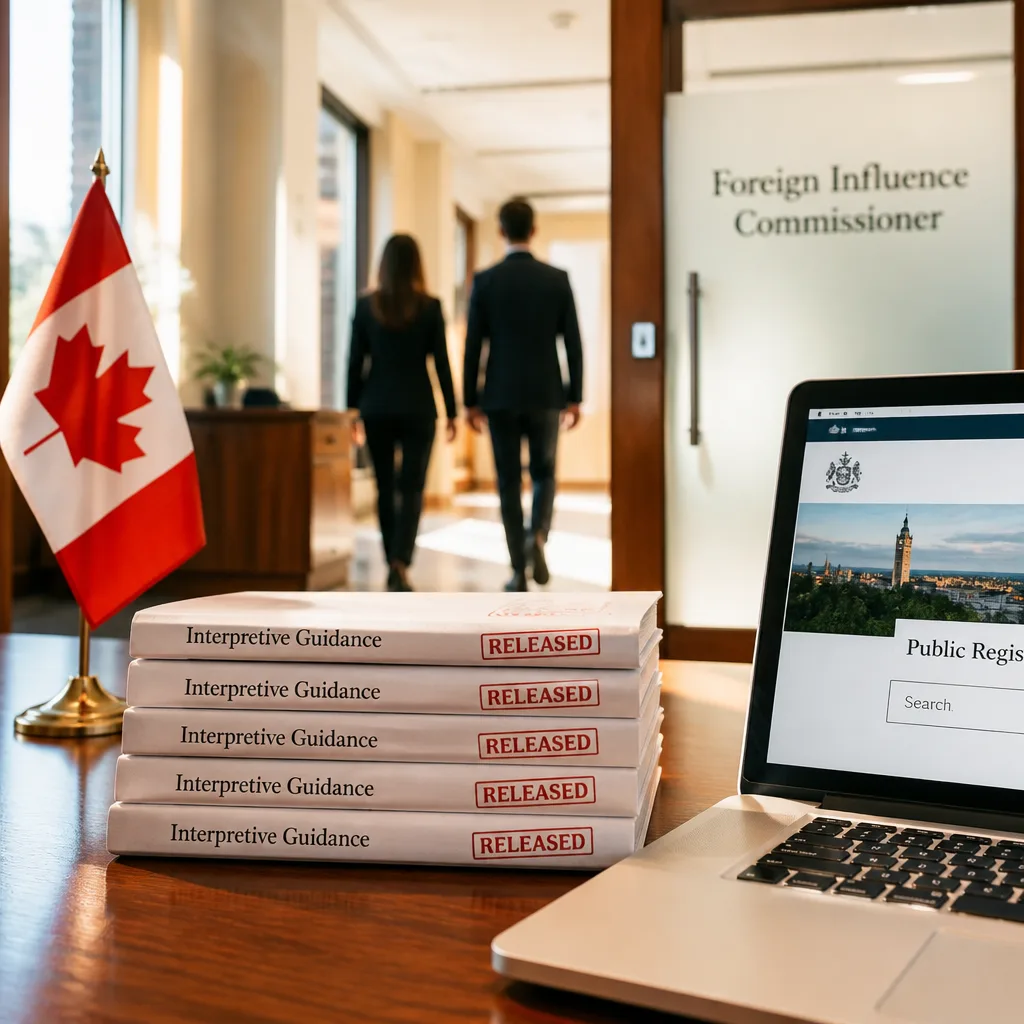
The office of the newly created Foreign Influence Commissioner moved on the first day of its mandate to offer practical guidance on the government’s new public registry aimed at exposing state‑backed attempts to influence Canadian politics.
Immediate clarification as registry opens
Commissioner Anton Boegman published five interpretation bulletins to explain key elements of the law that requires individuals and organisations with arrangements with foreign principals to register when they conduct activities intended to influence Canadian public life.
The bulletins address several central questions that have attracted concern from civil society and legal groups: how to define an arrangement, what constitutes an influence activity, and where solicitor‑client privilege sits relative to the registration obligations.
“Providing advice, which is subject to solicitor‑client privilege, to a foreign principal is not considered an influence activity,” one of the bulletins states.
The clarification on legal advice was highlighted by the commissioner’s office as important for the legal community, which had sought assurances that routine privileged communications would not trigger reporting duties.
Scope and enforcement
Under the statute, persons or organisations that have an arrangement with a foreign principal to carry out activities intended to influence government or political processes must register or face potential fines or criminal prosecution. The Public Safety Minister, Gary Anandasangaree, framed the registry as a transparency and accountability measure.
“With the establishment of the public registry, we are moving to ensure those representing the interests of a foreign entity do so with transparency and accountability, and to weed out the foreign interference that seeks to harm our country and our people,” the minister said in a statement.
The commissioner’s interpretive guidance is meant to reduce uncertainty for those who may be required to disclose their relationships and activities. Officials from the office also indicated they will monitor how the rules operate and adjust guidance where necessary.
Questions and possible consequences for stakeholders
Advocates for the registry say it will shed needed light on state‑backed meddling. But legal experts, civil liberties organisations and some advocacy groups have warned that the measures could be drafted or applied so broadly that they might capture legitimate advocacy, research, journalism or legal work — producing a chilling effect.
The commissioner’s bulletins attempt to narrow some of that concern by distinguishing between legal advice protected by privilege and influence activities that aim to sway public office holders or members of the public. Still, uncertainty remains for activities on the margins of the law.
- Who must register: individuals or organisations with an arrangement with a foreign principal conducting influence activities.
- What counts as an influence activity: actions intended to sway Canadian political or government processes.
- Solicitor‑client privilege: legal advice subject to privilege is not treated as an influence activity under the guidance.
Officials have signalled the office will be watching how registrations and the law operate in practice and will be prepared to issue further clarifications or tweaks based on observed issues.
| Bulletin topic | Summary |
|---|---|
| Definition of arrangement | Explains what types of relationships with a foreign principal trigger registration duties. |
| What is an influence activity | Clarifies which activities aimed at influencing government or politics fall within the law. |
| Solicitor‑client privilege | States that privileged legal advice to a foreign principal is not an influence activity for registry purposes. |
The federal government has emphasised enforcement tools, including fines and potential criminal penalties, but the commissioner’s office has so far focused on interpretation and compliance guidance. The balance between revealing foreign influence and protecting legitimate civic, academic and legal activities will likely be central to how the registry is perceived and used.
As registrations begin, stakeholders from the legal community, advocacy groups and foreign policy circles will be watching the commissioner’s next moves closely to see whether further refinements are needed to limit unintended consequences while preserving the registry’s stated goal of transparency.