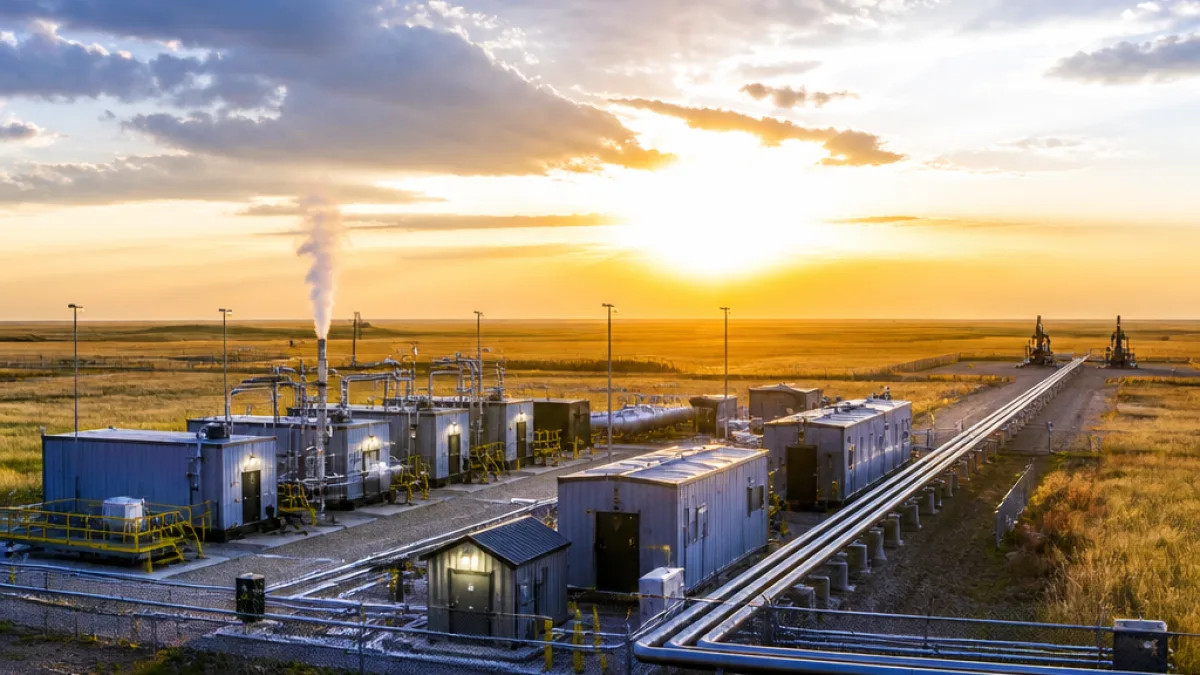
Vancouver — EMP Metals Corp. has finished construction of its Project Aurora demonstration plant, the company announced on Aug. 5, and is continuing commissioning with an eye to beginning demonstration operations in the third quarter of 2026. The facility, located within the company’s Viewfield Project Area in Saskatchewan, is described by EMP as one of the first lithium brine operations in Canada to achieve a fully integrated configuration connecting the production well and the waste brine disposal well.
What was completed and why it matters
According to the company's press release, the plant is now directly connected to both the production well and the waste brine disposal well, allowing continuous delivery of fresh production brine through the plant systems while returning spent brine to a targeted disposal interval. EMP said that configuration enables full commissioning under actual field operating conditions rather than laboratory or staged tests, which the company says will produce more reliable engineering, operating and economic data to support future commercial expansion.
- Throughput: Project Aurora is designed to process 10 m3/day of raw brine from wellhead to lithium chemicals.
- Commissioning status: EMP reports commissioning activities are approximately 50 per cent complete and live production brine is being processed through multiple operating systems.
- Commercial ambition: The company says it is pursuing initial commercial modules targeting 1,500 to 3,000 tonnes annually, with capacity designed to be expandable thereafter.
Company statement and timeline
EMP Metals CEO Karl Kottmeier is quoted in the release, describing the completion of construction as a “major milestone” that shifts the company’s focus from building to operating the facility. He added,
“Fresh production brine is now flowing through the process as we continue integrating each system, and with commissioning approximately halfway complete, we remain on schedule for Q3 start-up.”
The demonstration plant is intended to validate the company's continuous-flow lithium refining process, help optimise operating parameters and produce the sort of engineering and economic data that lenders, partners and regulators typically expect before commercial-scale projects proceed. EMP indicated commissioning is progressing according to plan and that the facility will support future commercial development decisions.
Local and national context for Aurora readers
For residents in Aurora and across Ontario, the development is part of a broader national effort to build Canadian capacity in lithium and battery materials processing. Although Project Aurora itself is sited in Saskatchewan, successful demonstration of Canadian brine-to-chemical processing would strengthen domestic supply chains for electric-vehicle batteries and energy storage systems — sectors that are increasingly important to Ontario’s manufacturing and auto supply ecosystem.
The stated commercial targets — 1,500 to 3,000 tonnes annually for initial modules — are modest compared with large global producers but represent a step toward vertically integrated North American battery material supply. EMP’s decision to pursue an integrated, continuous-flow approach and to commission under real wellfield conditions signals an emphasis on technical validation before scaling.
| Item | Detail |
|---|---|
| Facility throughput | 10 m3/day raw brine |
| Commissioning progress | Approximately 50% complete |
| Initial commercial module target | 1,500–3,000 tonnes/year (expandable) |
| Planned demonstration start | Q3 2026 |
As Project Aurora moves from construction to operation, stakeholders such as provincial regulators, potential industrial partners and local supply-chain firms will be watching for the data and performance metrics that come from demonstration runs. That information is key to assessing environmental impacts, economics and the timeline for any commercial rollout.
For Aurora residents interested in how Canada is developing critical minerals processing capacity, EMP’s announcement is a reminder that projects across the country — even those not sited in Ontario — can influence regional industrial strategies, investment and jobs tied to the green-energy transition.