The Democratic Republic of the Congo is confronting a surging Ebola epidemic with the number of confirmed infections now at 2,973 and fatalities reaching 1,309, government figures showed on Friday. The outbreak is occurring amid growing unrest among health and frontline workers, including strikes and demonstrations that have disrupted care at treatment centres.
Workers protest at treatment centre
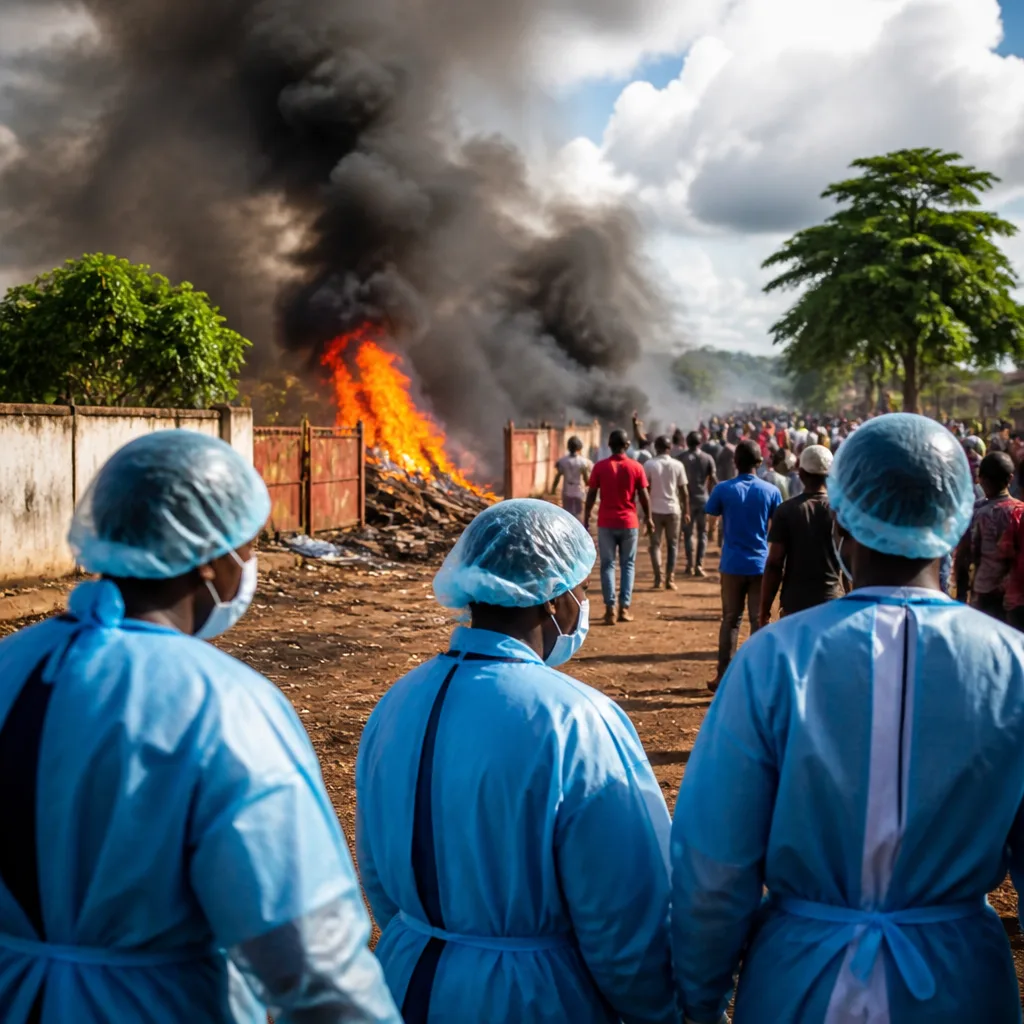
Images from Bunia, in the northeast of the country, showed rubble set alight outside the Elikya Ebola Treatment Centre as health and frontline staff protested on Saturday. The demonstrations reflect mounting frustration among local workers over working conditions, safety concerns and the stresses of responding to a fast-evolving epidemic.
"what authorities say is the fastest-growing outbreak on record"
Authorities have described the current epidemic as the most rapidly expanding on record, a characterisation that underscores the scale and pace of transmission. The combination of a sharp rise in cases and disruptions to response operations is heightening concerns among public-health officials and humanitarian actors about containment prospects.
Operational impacts and risks
Strikes and protests by health personnel can have immediate consequences for outbreak control. They may reduce the number of staff available to operate isolation units, perform contact tracing, administer supportive care, and carry out safe burials — all critical components of an effective Ebola response. Even temporary closures or reduced capacity at treatment centres can lead to delays in identifying and isolating infectious patients, increasing the risk of onward transmission.
International partners typically support national efforts through personnel, equipment and technical assistance; however, those interventions rely on the presence and cooperation of local teams. Disruption within treatment centres and community distrust that often accompanies unrest can also hamper vaccine campaigns, laboratory testing and public-health messaging.
Confirmed cases and deaths
| Metric | Number |
|---|---|
| Confirmed cases | 2,973 |
| Deaths | 1,309 |
Those totals, released by Congolese authorities, place the epidemic among the larger Ebola outbreaks recorded in the past decades. Public-health officials will be watching trends in new case counts, geographic spread and the capacity of treatment and laboratory networks to keep pace with demand.
Community trust key to response
Previous Ebola responses have shown that community acceptance and cooperation are essential to interrupting transmission. Distrust of responders, misinformation, and attacks on health infrastructure have repeatedly undermined containment attempts in past outbreaks. The recent protests and property damage at a treatment facility in Bunia risk deepening mistrust and complicating outreach efforts.
- Nearly 3,000 confirmed Ebola cases have been reported in the DRC.
- More than 1,300 people have died in the current outbreak.
- Strikes and protests at treatment centres are disrupting the response and could increase transmission risk.
As the outbreak evolves, national and international health authorities are likely to emphasise restoring dialogue with local health workers, addressing grievances, and ensuring adequate protections and support for responders. Strengthening community engagement and security at treatment sites will be critical to resuming full operations and reducing further spread.
The speed and scale of the epidemic, combined with operational setbacks linked to staff unrest, make containment more challenging. Public-health authorities face the dual task of expanding clinical and surveillance capacity while rebuilding trust with workers and communities whose cooperation is essential to control efforts.