The Chiefs of Ontario (COO), which represents 133 First Nations in the province, has declared its support for calls to launch an independent public inquiry into the provincial response to this summer’s wildfires.
Calls for accountability after evacuations and damage
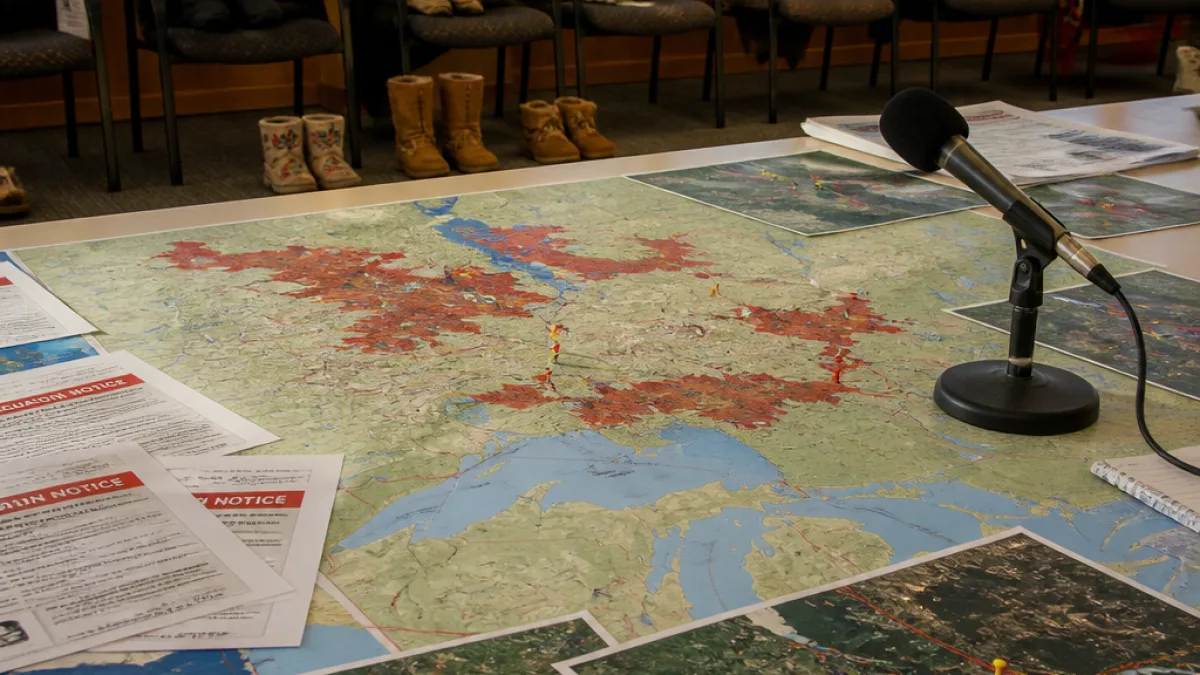
The COO’s announcement follows evacuations that affected at least a dozen First Nations and displaced more than 1,800 people. Leaders say there was extensive destruction reported in several communities, including Whitewater Lake and Namaygoosisagagun.
Ontario Regional Chief Abram Benedict said the scale of the failures warrants a formal, independent review.
“There has been a catastrophic and systemic failure at nearly every level and at nearly every step of this process,”
Benedict told reporters the inquiry would be the appropriate mechanism to determine how and why the response broke down and to recommend changes that would prevent a repeat.
What leaders want from an inquiry
Chiefs and other First Nation leaders say an independent commission should have authority to call witnesses, gather evidence, hear testimony and issue a final report with findings and recommendations to strengthen Ontario’s emergency management system.
At a July 21 news conference in Thunder Bay, leaders directly affected by the fires made public demands that go beyond an inquiry. Gull Bay Chief Wilfred King described serious communication and evacuation shortcomings and urged urgent reform.
“How could this happen? More importantly, how do we make sure this never happens again? That’s what they must answer,”
Speakers also asked for structural changes to how wildfire response is coordinated within provincial government and the removal of senior Natural Resources officials they say were responsible for policy, planning and oversight.
Proposed structural reforms
Among the reforms put forward by leaders is transferring some responsibilities that currently sit with the Ministry of Natural Resources to the Ministry of Emergency Preparedness. They argued this would improve coordination and accountability during large-scale emergency events affecting remote and Indigenous communities.
- Independent public inquiry to examine the summer’s response
- Transfer of specific wildfire-response responsibilities to the Ministry of Emergency Preparedness
- Removal of two senior Natural Resources officials implicated in oversight and planning
Scope and powers sought for a commission
Leaders emphasised the need for broad investigative powers so a commission could undertake a full, transparent review. The COO said a public inquiry would be able to call witnesses and gather the necessary documentation to produce actionable recommendations.
The push for a formal commission is rooted in the experience of communities forced to evacuate and those that reported extensive damage. Leaders say learning lessons now is essential to protecting lives, homes and cultural sites in future fire seasons.
| Item | Detail |
|---|---|
| First Nations affected | At least 12 |
| Evacuated residents | More than 1,800 |
| Communities reporting heavy damage | Whitewater Lake, Namaygoosisagagun (among others) |
Next steps and public expectations
Chiefs of Ontario framed the inquiry as both a demand for accountability and a tool for systemic improvement. Regional Chief Benedict said the commission should not merely catalogue failures but produce concrete steps to reform how Ontario plans for and responds to wildfires, especially where they affect remote and Indigenous communities.
How the provincial government will respond to the call — whether by agreeing to an inquiry, implementing structural changes within ministries, or addressing personnel concerns — remains to be seen. Leaders say swift action is needed to restore trust and safeguard communities ahead of future fire seasons.
The growing chorus for an independent investigation underscores broader questions about emergency preparedness, intergovernmental coordination and the protection of vulnerable communities during climate-driven disasters.
Reporting from Thunder Bay and statements by Chiefs of Ontario form the basis of this article.