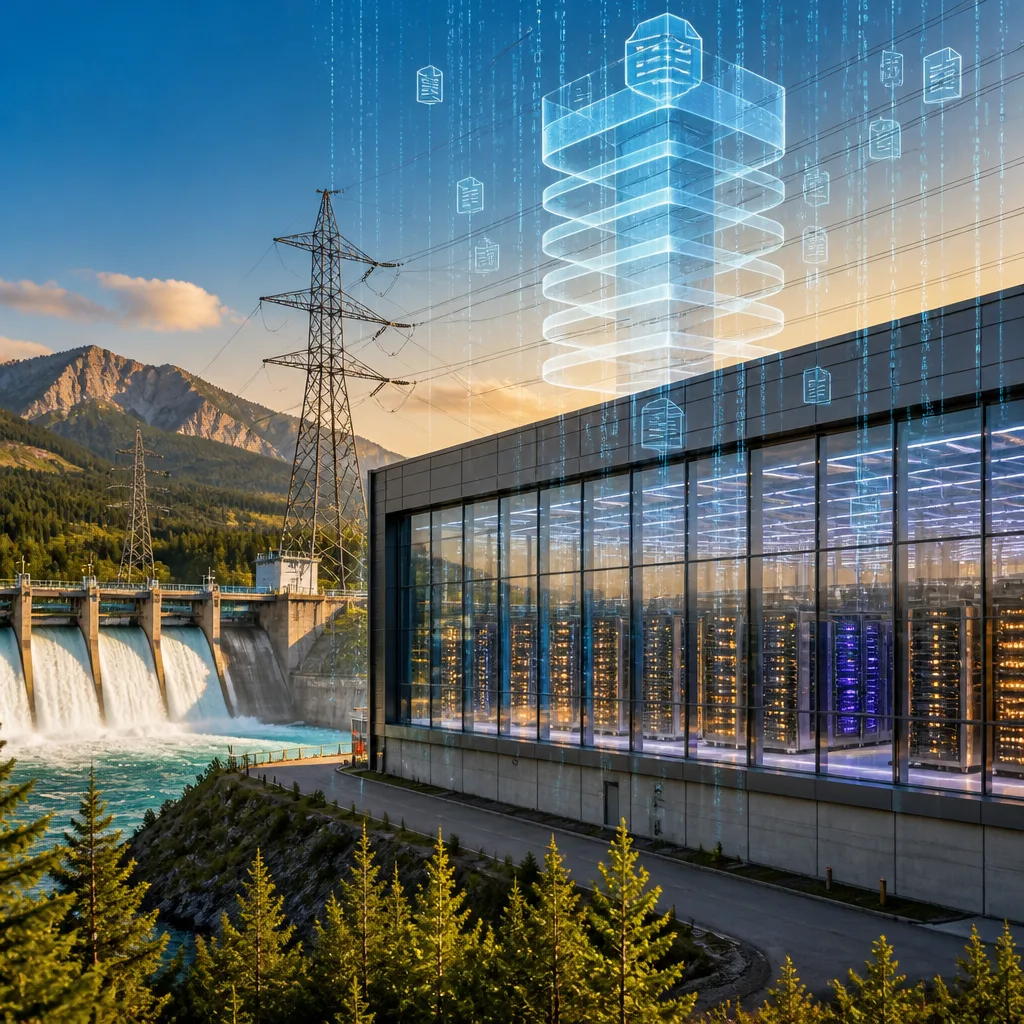
Lower per‑unit model costs are changing how organisations use artificial intelligence, but a less visible part of the stack is quietly pushing power consumption higher: the data layer underpinning enterprise AI systems. That is the central argument from a recent industry perspective that links falling token prices with rising total compute demand and greater strain on the power grid.
Cheaper tokens, more total compute
Unit costs for model use have declined, encouraging wider adoption. But each AI interaction now often involves additional steps — retrieval of broader context and multi‑step reasoning — which increases the work that happens before a model generates output. The result is a familiar economic pattern: lower prices per unit can drive higher aggregate consumption.
"The paradox: Cheaper tokens, more total compute"
That additional work has consequences beyond cloud bills. The International Energy Agency has warned that AI and data centres are becoming a significant source of electricity demand. Independent analysis from Goldman Sachs Research projects that data centre power demand could rise 165 per cent by 2030 compared with 2023 levels. Today, data centres consume roughly 415 terawatt hours of electricity, about 1.5 per cent of global electricity use, and that consumption has grown at roughly 12 per cent annually over the past five years.
Why the data layer matters
Responses to rising energy demand typically concentrate on model architecture and specialised hardware. Those areas are important, yet enterprise environments often carry inefficiencies before any model is invoked. The data layer — how context is retrieved, cached, transformed and fed into models — can multiply the underlying compute required for each request. Cheaper tokens make it tempting to push more work into the model side of a workflow, but the preparatory and retrieval steps still demand compute and therefore electricity.
That reality reframes optimisation priorities. Enterprises that focus only on model costs risk missing larger sources of inefficiency. Addressing the data layer means looking at how data is stored, indexed, retrieved and deduplicated, and how repeated or unnecessary retrievals are avoided. It also implies tighter measurement of end‑to‑end energy and compute footprints rather than focusing solely on per‑token pricing.
- Lower token prices increase incentives to deploy models across more workflows.
- More complex interactions mean each request often requires retrieval and multi‑step reasoning.
- Data layer inefficiencies can account for a meaningful share of the extra compute and electricity demand.
The argument is not a call to abandon models or specialised chips; it is a reminder that the full pipeline matters. Measuring and optimising only model costs gives an incomplete view of the total energy impact of AI at scale.
Numbers that matter
The scale of the challenge is clear from the projections and current usage cited in the analysis. For quick reference:
| Metric | Figure |
|---|---|
| Current data centre electricity consumption | ~415 TWh |
| Share of global electricity use | ~1.5% |
| Annual growth (past five years) | ~12%/yr |
| Projected increase by 2030 (vs 2023) | +165% (Goldman Sachs Research) |
Those figures underscore why policymakers, energy planners and technology teams should widen their focus beyond model costs. Even if token economics improve, the physical reality of compute — and the electricity it consumes — persists.
For Canadian organisations and regulators, the takeaway is pragmatic. Reducing the climate and grid impact of AI will require attention to the entire stack: data storage and retrieval strategies, system architecture that minimises redundant work, and better metrics that capture end‑to‑end energy use. Without that, cheaper tokens may simply encourage more consumption and shift the load further onto already strained grids.
Optimising the data layer is not a silver bullet, but ignoring it guarantees surprises in both bills and energy demand. The conversation about sustainable AI must move from headline model improvements to the quietly costly plumbing that makes large‑scale AI possible.