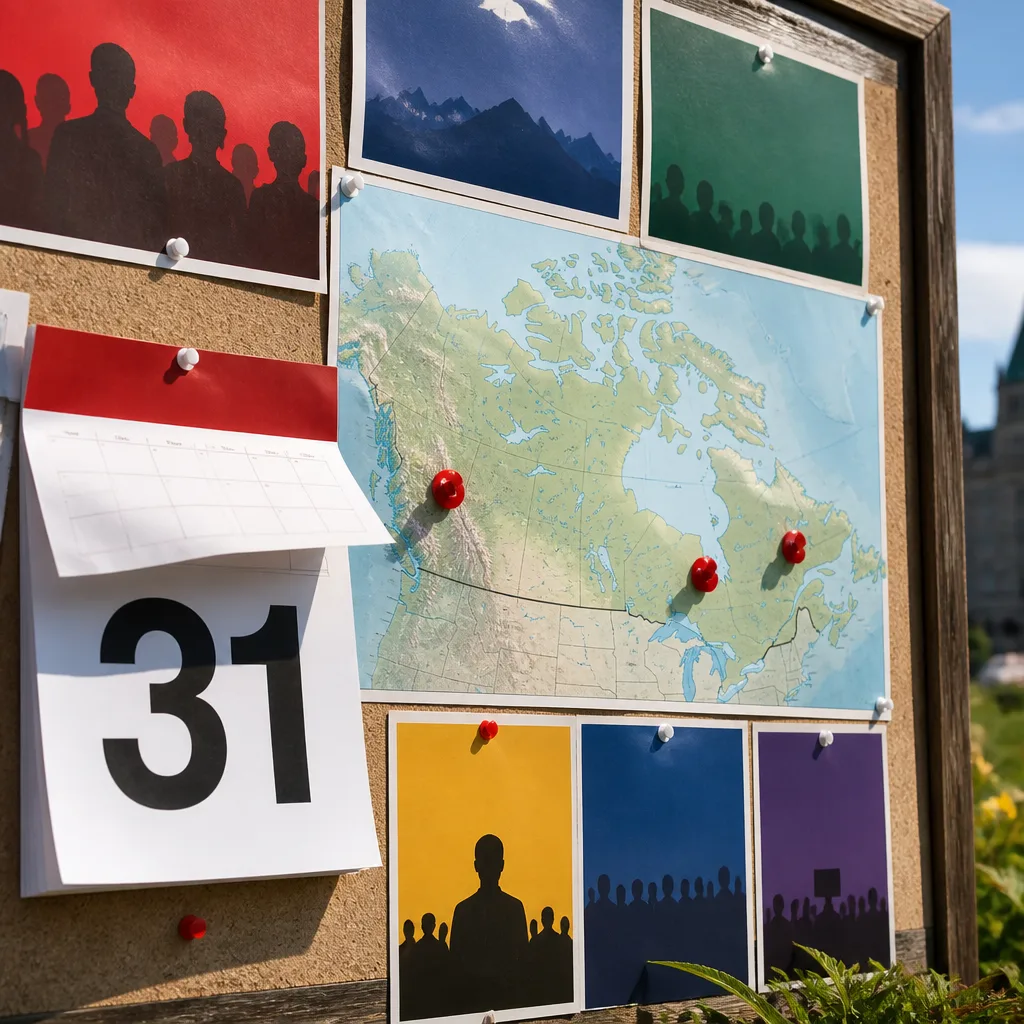
Prime Minister Mark Carney has formally called federal by-elections for Aug. 31 in three ridings: North Vancouver–Capilano in British Columbia, Beaches–East York in Ontario and Chicoutimi–Le Fjord in Quebec.
Why the seats are vacant
All three constituencies became open during the summer for separate reasons. One vacancy followed the resignation of a sitting member who chose to leave politics; another arose when a long-serving MP and former cabinet minister was appointed Canada’s ambassador to the European Union; and a third was created by a senatorial appointment.
In North Vancouver–Capilano the departure followed the appointment of longtime Liberal MP and cabinet minister Jonathan Wilkinson as Canada’s EU ambassador. He stepped down from Parliament last month.
In Ontario, Nate Erskine-Smith resigned his Beaches–East York seat earlier this month. His resignation came two months after he lost the Ontario Liberal Party nomination in Scarborough Southwest. He had previously indicated to local media that he intended to step down regardless of the nomination result and has since said he is considering a run for Toronto city council.
The source material indicates the third vacancy resulted from a senatorial appointment, but does not name the MP who left to join the upper chamber.
Political context and stakes
The by-elections arrive only weeks after a separate set of contests in Ontario returned three more Liberal MPs and handed the governing party its first majority in this Parliament since 2015. The seats now on the ballot include constituencies the Liberals have recently held, but each has distinct electoral histories.
- Beaches–East York is portrayed in local coverage as a Liberal stronghold since 2015, when Mr. Erskine-Smith first won the riding. The seat had previously been held by the New Democratic Party during its 2011 surge.
- North Vancouver–Capilano has been in Liberal hands since 2015, when Mr. Wilkinson defeated the Conservative incumbent Andrew Saxton amid the Liberal wave that brought Justin Trudeau’s government to power.
- Chicoutimi–Le Fjord has a more changeable history; the source notes the riding has traded hands multiple times but does not provide a full electoral timeline.
The by-elections will be watched for their local outcomes, but they also serve as an early gauge of voter sentiment toward the federal government and the opposition parties in three different provinces.
Timing and immediate effects
Voters in the three ridings will go to the polls on Aug. 31. Holding three simultaneous by-elections consolidates campaign attention and resources in a single day, and parties will likely deploy national and provincial campaign teams to contests that could be competitive despite recent Liberal strength in two of the three seats.
| Riding | Province | Reason for vacancy |
|---|---|---|
| North Vancouver–Capilano | British Columbia | Appointment of Jonathan Wilkinson as Canada’s EU ambassador |
| Beaches–East York | Ontario | Resignation of Nate Erskine-Smith after losing a provincial nomination |
| Chicoutimi–Le Fjord | Quebec | Seat vacated following a Senate appointment (unnamed in source) |
Beyond replacing individual MPs, by-elections briefly refocus national political debate on constituency-level issues and candidate choice. For the governing party, defending seats it already holds is a priority; for opposition parties, by-elections offer opportunities to make inroads and shape momentum heading into the next general contest.
With three contests on the same date, parties must balance resources and messaging across distinct regional electorates — an exercise that will test the national parties’ campaign organisation and local networks.
Results from Aug. 31 will be counted as incremental changes to the makeup of the House of Commons, but they will carry outsized symbolic value as the first federal tests in multiple provinces since the most recent by-election round that delivered the Liberals a boost this spring.