The California Democratic Party’s executive board voted to endorse Proposition 40 on Sunday, throwing the state party’s institutional weight behind a contentious proposal that would impose a one‑time 5 per cent tax on the assets of billionaires to fund healthcare and to backfill cuts to federal programs.
What the measure would do
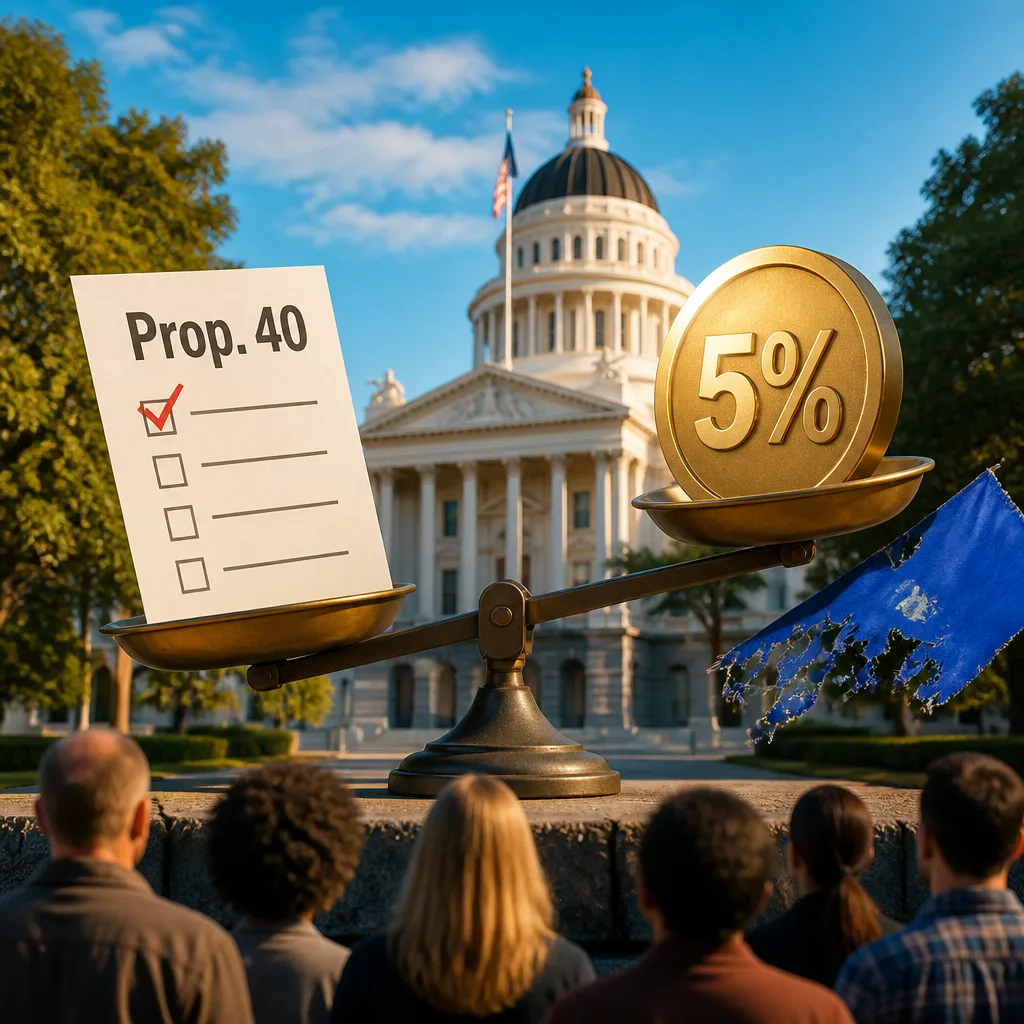
Proposition 40 seeks to generate roughly $100 billion over five years, according to proponents, by levying a single 5 per cent charge on the net worth of individuals with billionaire status. Backers say the revenue would be used to restore funding curtailed by federal policy changes, notably to Medicaid and food assistance programs referenced in the campaign literature for the measure.
Partisan and organisational splits
The endorsement underscores a sharp split among Democrats and aligned organisations. Prominent progressives have voiced support, while high‑profile Democrats including Governor Gavin Newsom and gubernatorial candidate Xavier Becerra have publicly opposed the ballot question. Labour groups are also divided: some unions, including the California Teachers Association, are listed among opponents, while SEIU‑United Healthcare Workers West — the union that gathered the signatures to place the measure on the ballot — has been a leading advocate.
“This endorsement puts to rest the idea that California Democrats are not united by the billionaire tax — they are,” said Dave Regan, president of SEIU‑United Healthcare Workers West.
Regan pointed to an internal union poll he said found more than 80 per cent of registered Democrats supported the tax. That claim contrasts with publicly available survey data that show narrower margins of support overall.
Public opinion and the numbers
Independent polling cited by proponents and opponents paints a mixed picture. A May survey by the Public Policy Institute of California found:
- 54 per cent of likely voters said they would back the measure;
- 76 per cent of self‑identified Democrats indicated support.
| Group | Support (May PPIC poll) |
|---|---|
| Likely voters | 54% |
| Democrats | 76% |
Public polls have shown only slim overall majorities in favour, a dynamic that critics say leaves the measure politically vulnerable and complicates coalition building ahead of November’s vote.
Arguments from both sides
Supporters frame Proposition 40 as a corrective measure, arguing that recent federal tax changes have disproportionately benefited the very wealthy and that a temporary wealth levy would provide necessary resources for essential services without altering longer‑term tax regimes.
Opponents counter that a one‑time tax on billionaires could have destabilising fiscal consequences. Their warnings include the possibility that ultra‑wealthy residents might relocate, eroding the tax base, and that the measure’s temporary nature would not address structural budget issues. The No on Prop. 40 campaign has emphasised those risks and highlighted high‑profile Democratic figures and organisations that have come out against the proposal. A group of tech founders and other wealthy donors have also begun substantial spending to defeat the measure.
Consequences and context
The endorsement from the state party may provide organisational advantages for supporters, from fundraising lists to volunteer mobilisation. Yet the decision also crystallises tensions within California’s Democratic coalition — between progressive activists pressing for aggressive wealth redistribution and moderates worried about economic side effects and fiscal stability.
For national observers, the fight over Proposition 40 offers a window into an emerging debate within U.S. Democratic politics: how far to push taxes on wealth as a mechanism for funding social programmes, and the political costs of doing so in a state where the very wealthy contribute a substantial share of income tax revenues. The outcome in California this November could influence narratives and tactics elsewhere as parties and interest groups assess appetite for similar measures.
With several months to go before the ballot, the contest is expected to intensify. Voters will weigh competing claims about revenue, fairness and long‑term fiscal health as campaigns on both sides escalate advertising, outreach and fundraising efforts.