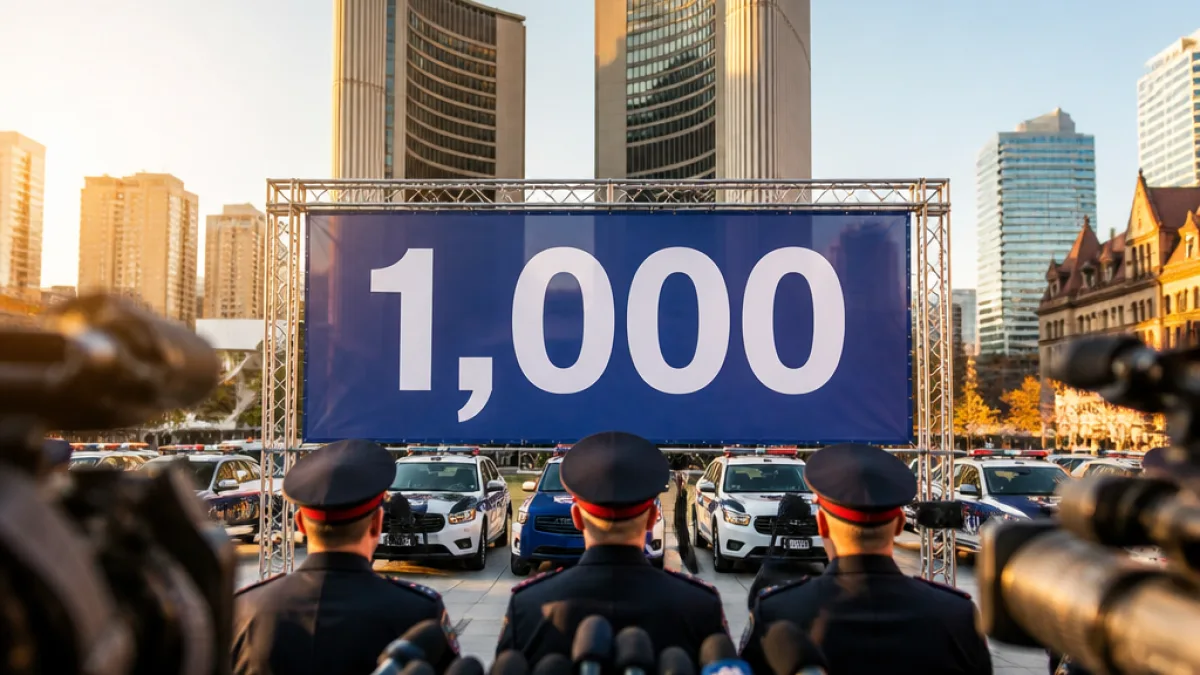
TORONTO — A leading mayoral candidate has pledged to add 1,000 new police officers to the Toronto Police Service within his first four years in office, a promise that exceeds the hiring plan already announced by the incumbent and thrusts public safety into the centre of the city’s municipal race.
Numbers and competing plans
At a news conference Thursday, Beaches–East York councillor Brad Bradford said the additional officers would be "on the beat, on patrol in your neighbourhood and at your local subway station," arguing more boots on the ground are needed to keep streets, transit and events safe.
"A thousand new officers will help ensure our police service has the resources it needs to keep our streets safe, our festivals, our transit and our neighbourhoods safe," Bradford said.
Bradford’s pledge surpasses a five-year hiring plan launched last year by Mayor Olivia Chow, who is seeking re-election. Chow’s plan calls for an estimated 720 officers to be added in the next two years, with the possibility of more hires after that, and also includes hiring about 90 additional 911 operators.
| Plan | Officers | Additional 911 operators | Timeframe |
|---|---|---|---|
| Bradford (pledge) | 1,000 | N/A | 4 years |
| Chow (current plan) | 720 (estimated) | 90 (estimated) | 2 years (with possible additions later) |
Open questions and local consequences
While the pledge responds to voters who list safety as a top concern, Bradford did not provide an estimate of the cost to taxpayers or detail where the officers would be assigned beyond general references to neighbourhoods and transit hubs. That omission leaves unanswered questions about how the hires would fit into the city’s operating budget and long-term fiscal plans.
The timing of the announcement adds urgency to a conversation already underway: Toronto’s population has increased by about 21 per cent since 2010, a fact Bradford cited to argue police ranks have not kept pace with growth. The city’s evolving needs for emergency communications were also acknowledged in Chow’s plan through the proposed hiring of additional 911 operators.
- Budget impact: Without a cost estimate it is unclear what trade-offs or new revenue sources would be needed to fund 1,000 officers.
- Operational deployment: Details on whether hires would prioritise neighbourhood patrols, transit policing or specialist units were not provided.
- Labour and training capacity: Rapid recruitment at this scale would require coordination with the police service, the police board and training centres.
Political backdrop
The municipal election is about three months away, and public safety has emerged as a central issue among candidates. Chow’s campaign responded to Bradford’s announcement by defending the mayor’s hiring plan, saying it was developed in collaboration with the police chief, the Toronto Police Services Board and the Toronto Police Association.
Bradford framed his promise as a direct answer to residents who want more visible policing. He also argued the city’s police ranks have not risen proportionally with population growth, though he did not provide a specific staffing baseline or timeline beyond the four-year commitment.
As the campaign moves forward, voters can expect further scrutiny of how many officers are proposed, how quickly they could be hired, what the financial cost would be and how the city intends to balance policing with other public safety measures such as 911 services and social supports.
The debate over these questions is likely to shape council priorities and city budgets should candidates’ plans be adopted after the October vote.