Intel has publicly tied a big-name customer to its foundry effort, disclosing that Fortinet will use the chipmaker’s manufacturing services to develop advanced security processors — a notable endorsement for a business unit that has been expanding rapidly but is not yet profitable.
Foundry growth with lingering red ink
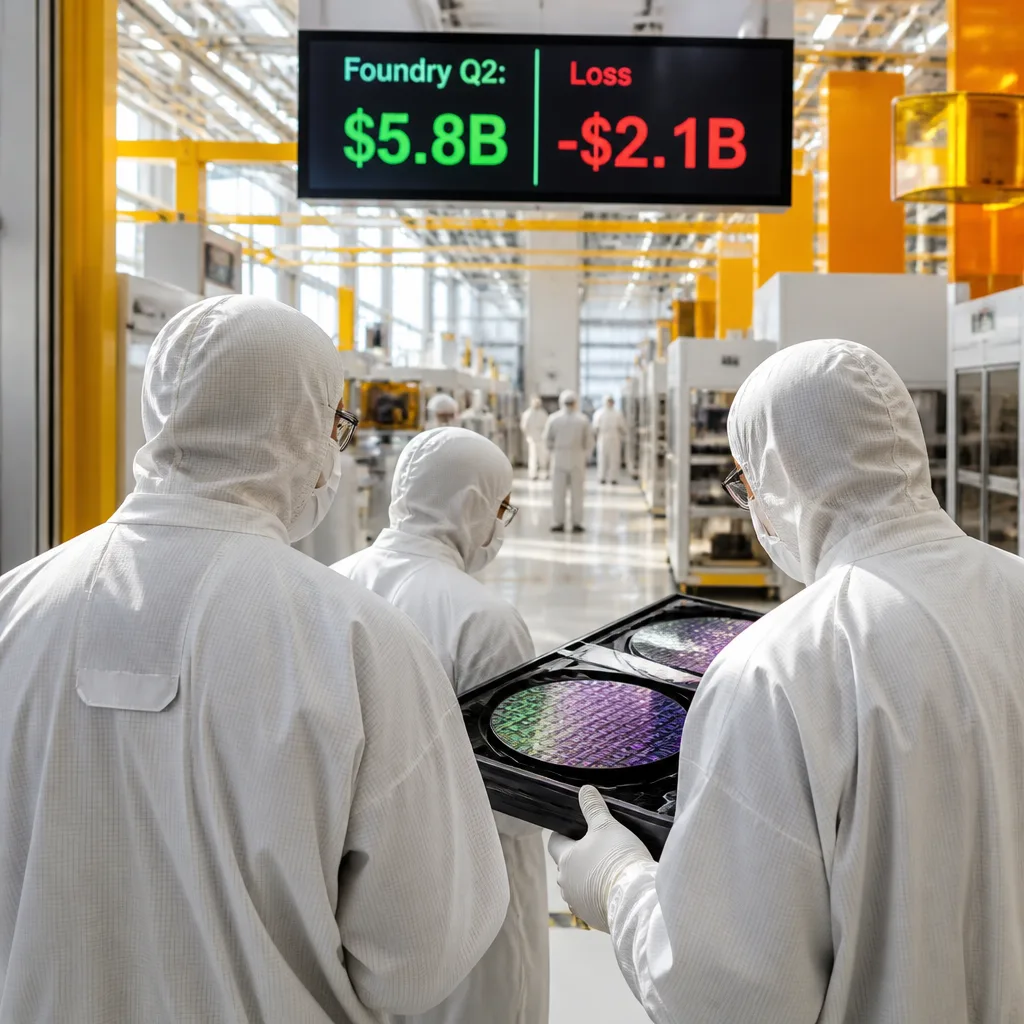
The company reported consolidated revenue of US$16.1 billion for the quarter ended June 27, with the foundry segment posting US$5.8 billion in sales. While that business unit is a leading growth contributor — up strongly year over year — it still operated at a loss, recording a US$2.1 billion deficit for the period. That represents an improvement from the prior-year loss of US$3.2 billion.
Securing a named client such as Fortinet, which generated nearly US$7 billion in revenue last year, is significant for Intel’s foundry ambitions. It demonstrates that large, sophisticated technology customers are willing to partner with Intel as they develop customised silicon, lending credibility to Intel’s efforts to attract business away from established contract manufacturers.
- Validation: Winning a security-focused customer with substantial scale signals competitiveness for Intel’s manufacturing and design services.
- Scale vs. profit: The foundry is growing revenue but has yet to generate positive operating income.
- Progress: Losses narrowed year over year, suggesting incremental improvements in efficiency or pricing.
Market context and implications
Intel’s drive to build a commercial foundry business aims to attract companies that need customised chips but lack large-scale fabrication capacity. The road ahead is difficult: the contract-manufacturing industry is dominated by firms with highly optimised cost structures and deep process expertise. Gaining meaningful market share will require continued customer wins and steady execution on manufacturing roadmaps.
For investors, the Fortinet announcement dovetails with a broader narrative that has driven significant share-price gains this year. Intel’s stock has advanced sharply amid optimism about the foundry opportunity, though the division’s continued losses temper immediate profit expectations. The company will need to convert revenue growth into consistent profitability to justify long-term investor enthusiasm.
| Metric | Value |
|---|---|
| Company revenue (quarter) | US$16.1 billion |
| Foundry revenue | US$5.8 billion |
| Foundry operating loss (current) | US$2.1 billion |
| Foundry operating loss (prior year) | US$3.2 billion |
| Fortinet annual revenue (approx.) | US$7 billion |
The deal illustrates how Intel is positioning its manufacturing capabilities beyond its own internal chip production, offering capacity to external customers that require specialised security and networking silicon. For customers like Fortinet, working with an established designer-manufacturer could accelerate time-to-market for custom accelerators or security chips tailored to evolving cyber threats.
From a competitive standpoint, Intel must continue to demonstrate reliability, process performance and cost competitiveness to lure more large customers. Each named partnership strengthens Intel’s case, but translating that momentum into sustainable profits will be essential for the foundry to become the growth engine many stakeholders hope it will be.
As the unit scales, watchers will look for further named contracts, margin improvement and whether Intel can close the gap with established contract manufacturers that currently dominate the global foundry market.
Reporting for NEXO RADAR’s Business section.