Tate McRae says she prefers to show what she stands for through action, not through responding to online political speculation — a stance she reiterated after releasing a chart-topping collaboration with Morgan Wallen and amid attention to her personal associations.
Collaboration and controversy
The 23-year-old singer joined country star Morgan Wallen on the single "What I Want," which became McRae’s first No. 1 on the Billboard Hot 100. The success of the song, which appears on Wallen’s album I'm the Problem, thrust McRae further into the spotlight — and into conversations about how artists’ public connections can be read politically.
That scrutiny intensified after reports tied McRae to an association with National Hockey League player Jack Hughes. Attention mounted when Hughes — part of a U.S. Olympic hockey gold-medal team — was shown laughing at a remark President Donald Trump made during a congratulatory call. The exchange, which occurred with FBI Director Kash Patel present, sparked debate online about the team’s interaction with the president and by extension the political views of figures close to them.
How McRae responds
Asked why she steers clear of political conversation in interviews, McRae told Variety that she prefers to let her choices and charitable work speak for themselves. She emphasised that the environments she cultivates — on tour and through organisations she supports — are how she expresses her values.
"I think it’s pretty obvious what kind of person I am and the things I support," McRae said, adding that she hopes fans can see that in the efforts she directs her energy toward.
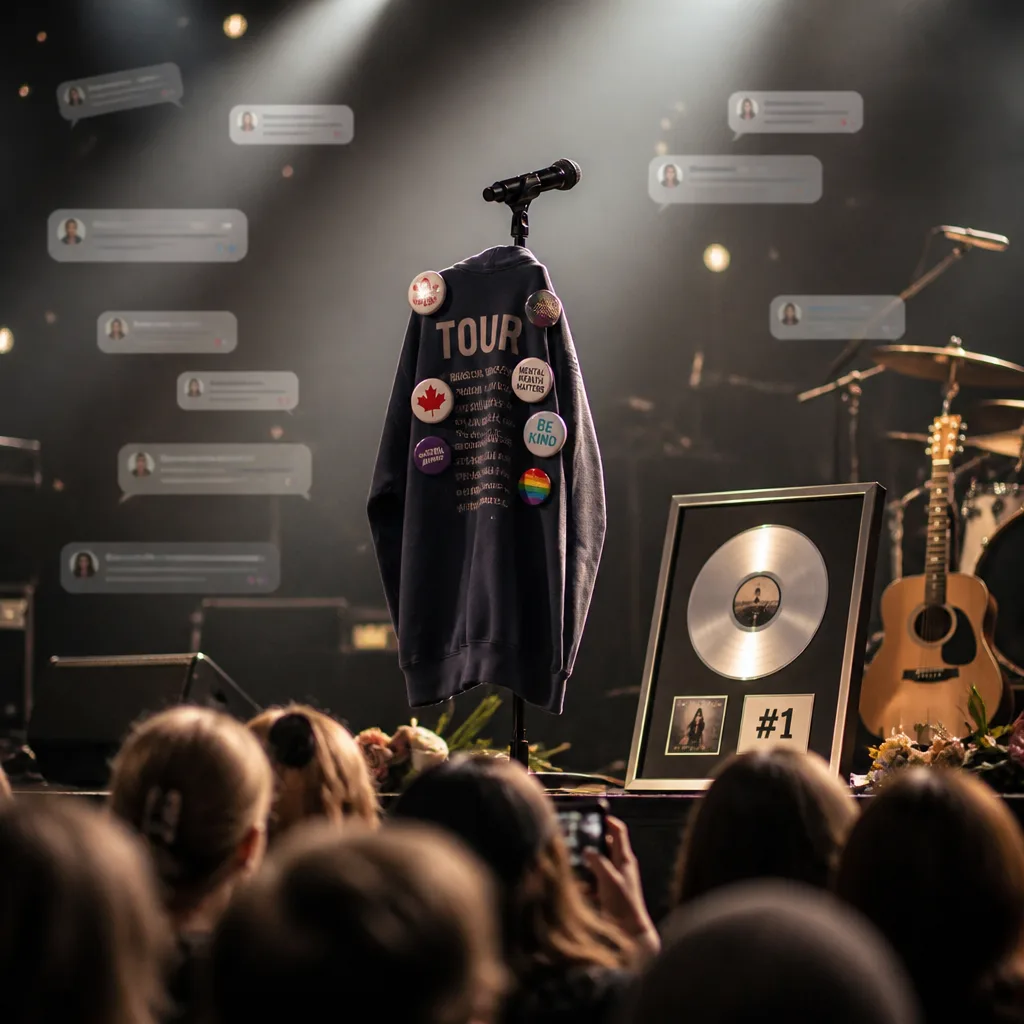
Her comments echoed a recent social-media moment in which she promoted a sweatshirt — the “Little Miss Possessive” item — with proceeds designated for two charities: the Global Fund for Women and The Trevor Project, which supports LGBTQ+ youth and suicide prevention. McRae used the promotion to highlight causes she backs rather than directly debating political labels.
- Music milestone: First Billboard Hot 100 No. 1 via collaboration with Morgan Wallen.
- Public scrutiny: Renewed after association with an athlete linked to a contentious presidential phone call.
- Charitable giving: Fundraising push benefitting Global Fund for Women and The Trevor Project.
Context and possible consequences
The episode points to the persistent challenge faced by public figures who navigate an era where personal relationships and single moments can trigger broader political readings. For McRae, the approach is a form of image management rooted in selective transparency: she highlights philanthropic actions and on-tour environments rather than making public political declarations.
Her strategy may satisfy some fans who value visible charitable commitments. It also reflects a broader trend among entertainers who seek to maintain artistic partnerships while avoiding being typecast by the political actions of collaborators or acquaintances. Yet, avoiding explicit statements does not always halt speculation; the public and media often continue to parse affiliations and perceived signals, particularly when they involve polarising figures or institutions.
| Item | Detail |
|---|---|
| Song | "What I Want" (with Morgan Wallen) |
| Chart achievement | No. 1 on Billboard Hot 100 |
| Charities named | Global Fund for Women; The Trevor Project |
As McRae continues to tour and release music, her decision to foreground charitable initiatives and curated public spaces may remain the primary way she conveys personal convictions. It is an approach that privileges concrete acts over declarative political language — a choice that resonates with some audiences and leaves others to draw their own conclusions.
For the entertainment industry, the episode highlights how quickly wartime social media narratives can circle back to artists and how collaborations across genres — in this case, pop and country — can produce both commercial reward and increased public scrutiny.
In the meantime, McRae’s response underscores a familiar refrain among contemporary performers: actions and affiliations, rather than sound bites, will be the yardstick by which they are judged.