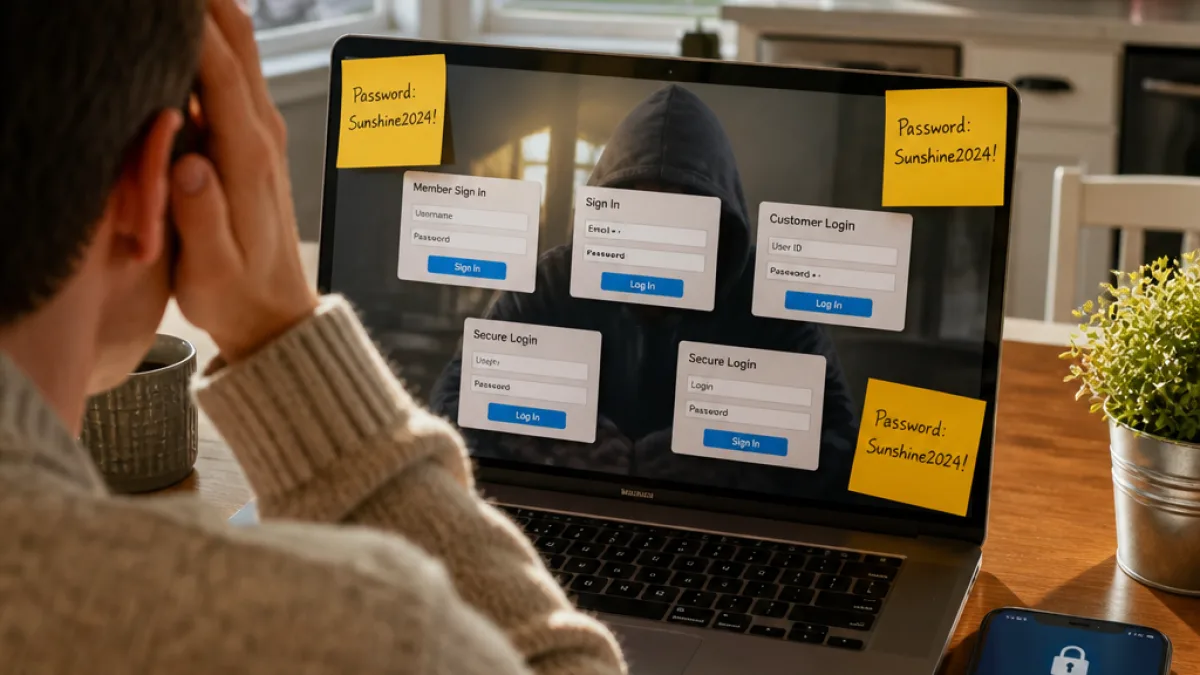
Police-affiliated group warns one-password practice leaves households exposed
Chatham-Kent residents are being reminded to stop using the same password across multiple online accounts after local Crime Stoppers highlighted the growing risk of financial loss and identity theft. The caution affects a wide range of services many households now rely on, from email and online banking to shopping and streaming platforms.
Chatham-Kent Crime Stoppers made the appeal in a statement that singled out password reuse as “one of the biggest cybersecurity risks people face.” The organisation urged residents to adopt stronger, unique passwords for every important account and to enable two-factor authentication where available.
“It might be frustrating to have to use different passwords and two-factor authentication, but it significantly reduces the risk of loss.” — Erica McIntosh, Crime Stoppers Coordinator
The warning reflects a common fraud pattern: when criminals gain access to a single username and password, they try the same credentials on multiple sites. That behavioural trait, known as credential stuffing, can quickly escalate a single compromise into a cascade that affects banking, shopping and identity documents.
Practical steps for local residents
Crime Stoppers emphasised three primary defences Chatham households can adopt immediately:
- Use unique, strong passwords for each important account, avoiding obvious or commonly used phrases.
- Enable two-factor authentication (2FA) where available, adding a second verification step such as a text code or authentication app.
- Employ a password manager to create and store complex passwords securely, or keep a written record in a safe place at home.
The organisation also warned against insecure practices such as taping passwords to computers or leaving them where others can access them. For those who prefer not to use a password manager, Crime Stoppers recommended a securely stored written record.
What this means for local businesses and vulnerable residents
Small businesses and local charities in Chatham that manage customer or donor information are especially exposed if employees reuse passwords on work-related accounts. A single compromised workplace email could provide attackers with access to financial portals or payroll systems.
Likewise, seniors and other vulnerable residents who may share passwords with family or caretakers can face an elevated risk of exploitation if credentials are not unique and protected. The recommendation to use two-factor authentication can be particularly effective in these cases, as it requires a second form of verification that is harder for fraudsters to replicate.
Quick-reference guide
Below is a simple comparison of security measures Crime Stoppers recommends and the protection they offer:
| Measure | What it does |
|---|---|
| Unique passwords | Prevents a breach on one site from affecting others |
| Two-factor authentication | Adds a second verification step, reducing account takeover risk |
| Password manager | Generates and stores complex passwords securely |
Crime Stoppers also suggested residents be vigilant for suspicious emails and unexpected account activity, and to contact their financial institutions immediately if they suspect unauthorised transactions.
Local support is available for those who need help implementing these measures. Many banks and internet service providers offer guidance on setting up two-factor authentication and using password managers; community centres and public libraries sometimes run digital literacy sessions that include cybersecurity basics.
As more of daily life moves online, the message from Chatham-Kent Crime Stoppers is clear: a small change in how passwords are managed can substantially lower the chance of becoming a victim of cybercrime. Residents are encouraged to act now to protect their finances and identities.